

Denied memory.
I’ve presented ‘Memoria negata’[1] by Marisa Brugna, May 13 - 2017.
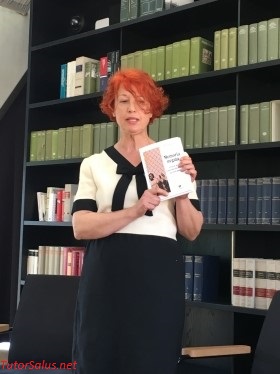
‘Fondazione Giangiacomo Feltrinelli’ – Milan, Viale Pasubio / ‘Speed Book Date’, at care of Alessandra Pagani.
Marisa Brugna is today a graceful seventy-five-year-old lady. ‘Memoria negata’ (Denied Memory) is her debut work, an autobiographical account of her childhood as a young girl caught up, along with her family and fellow citizens, in the precipitous exile from Orsera, now Vrsar. This town in Istria had just been assigned to Yugoslavia’s Marshal Josip Broz Tito and was a consequence of the Paris Peace Treaties in 1947. These treaties, signed after the 2nd World War’ armistice, anticipated even harsher persecutions against citizens of Italian origin and the infamous ‘foibe’ massacres—events that even the former President of Italian Republic, Giorgio Napolitano, referred to as inadmissible acts of ethnic cleansing.
Marisa embarked with her father, mother, and older sister, leaving her grandmother behind—the elderly often stayed so their children could leave, as definitive departures were discouraged by the Yugoslav government. They left their home and the small plots of land her father had farmed to build their house, carrying very few belongings to avoid raising suspicion among officials.
While the journey appeared almost like a cruise to the young Marisa—with stops in never-before-seen cities like Trieste and Venice—it proved adventurous because no one would accept the Istrian exiled people. Eventually, the Italian government provided at Latina’ city a ‘Refugee Collection Center’ (C.R.P.), where Marisa lived for ten years. Her memories of life in the camp remain crystal clear, filled with unpleasant sounds and smells: promiscuity was a reality to be accepted, as each family had only a few square meters shielded by curtains, with ‘communal’ kitchens and toilets. She admits she managed to save her wish to live through playing with other children—running, climbing—or in solitudes that she herself sought, such as asking mum to wash dishes or do laundry, as she loved washing with soap and water.
From those years, she retains a powerful memory of the contempt she faced and the distance at which camp residents were kept by compatriots who were outside. That fence allowed no visitors, and even a dedicated school was set up specifically for the children of the camp. The anorexia Marisa suffered from repeatedly, and for a long time, proved to be an ineffective defense against the hostility she endured. Yet, leaving the camp at seventeen, Marisa realized she had lost nothing in terms of satisfaction or friendship compared to her mates living outside; however, she had to work much harder than them to achieve those milestones. It is worth noting that Sigmund Freud first pointed out - in the famous cases of ‘Little Hans’ and ‘Dora’[2] - the ability that children have to recognize and prefer a favourable silence in which they can work out good solutions.
Once she moved to Sardinia, where her father was offered a little windy and dry land to farm, she managed to graduate and become a teacher, just as she had wished. She met a man she loved, she married him, and had children. Marisa Brugna chose to let her experiences of fulfillment—repeatable regardless of where life takes us—become her true roots. In doing so, she chose to become an ‘heir’ rather than a ‘refugee’. A truly winning choice.
Marina Bilotta Membretti/ Cernusco sul Naviglio – May 15, 2017
TutorSalus.net - Freudian journalism
[1] ‘Memoria negata’, Marisa Brugna – Edizioni Condàghes Srl 2013 ISBN 978-88-7356-010-4
[2] Sigmund Freud, ‘Il Caso di Dora’ (1905), ‘Il Caso del piccolo Hans’ (1909).