

Je, c’est moi.
The opposition to a gnostic duplicity.
“It’s easy to make explicit the Freudian implicit opposition to gnostic duplicity of ‘I’ : on the one hand an empirical, fluctuating, miserable, mistified and mistifying ‘I’, perhaps (for what it costs) a ‘sinner’, on the other hand a transcendent or transcendental ‘I’ as one prefers, pure, ‘spark’ of the gods that you search and find in ascetism at the end of which he, or she, will be revealed to himself or herself…”[1]
To benefit from one’s calling[2] / 35.
It’s hard to call it an error, when the errors around distract us for good reason : and it is the essential, unimaginable lever space because it does not involve guilt but a stumble.
Because of the rush to go somewhere.
Marina Bilotta Membretti / Cernusco sul Naviglio – July 3, 2024
TutorSalus.net - Freudian journalism
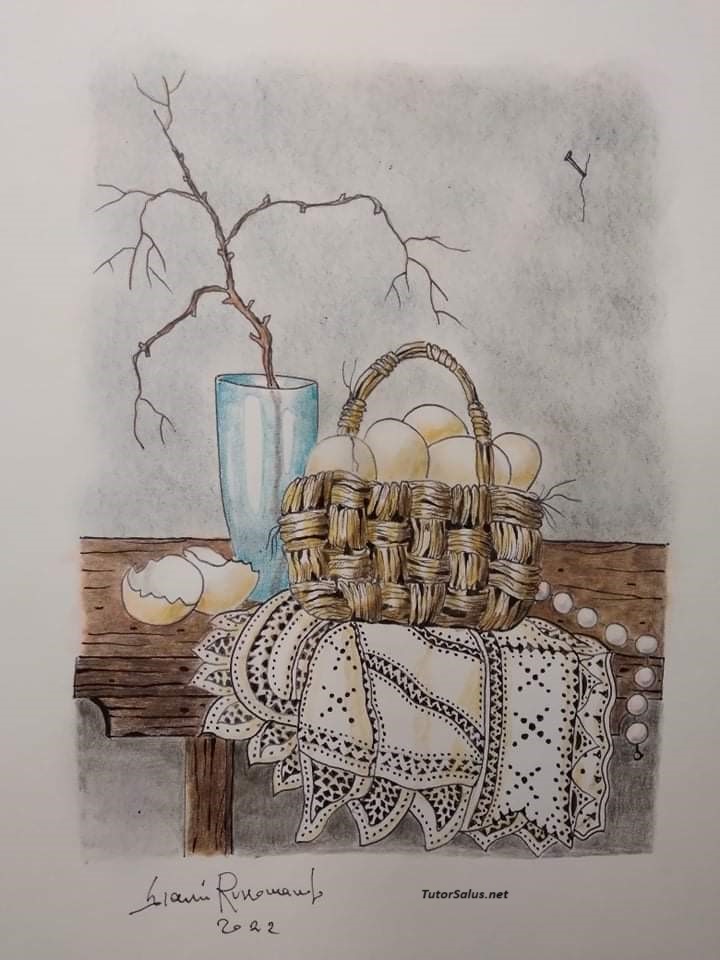
Illustrazione originale di Gianni Russomando[3]
[1] ‘Il pensiero di natura. Dalla psicoanalisi al pensiero giuridico’, Giacomo B. Contri SIC Edizioni (1998) – ‘La Carta o Enciclopedia’, p. 117 Nota 54.
[2] www.tutorsalus.net/index.php/en/pensare-da-partner-2/358-psychoanalyst-and-profession-1
[3] Gianni Russomando, biographical note : “I’m born in Vercelli (1956), graduated at the ‘Istituto di Belle Arti di Vercelli’, I describe myself as an ‘amanuense’ (medieval hand-painter) and far from expositions and competitions.”