Loading color scheme

“I wish it were unnecessary to point out that the lapsus, always and only human, is not produced automatically, the computer is powerless to produce lapsus: who would have said that the lapsus is a profit, which few take advantage of.”

(Cit. from THINK! by Giacomo B. Contri, ‘Freudian economic subversion’ October 30 – 2009).

Constructive solutions.  

 Ancient architectures from Armenia.
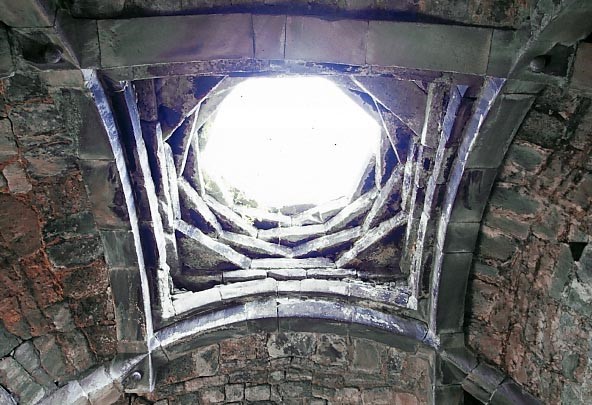
 

In the picture, details from the  glkhatun (XIII century a.C.) in the Monastery of Holy Apostles (Surb Arakelots Vank) at Kirants (Tavush, north of Armenia).


Milan - November 9, 2019: about a speech by Marco Ruffilli[1].


Surrounded, as we often are, by what have been ‘already said’, we don’t easily recognize what instead is the ‘unpublished’, that is the real novelties.

It is not only a Middle Ages singularity, and beyond, as Marco Ruffilli introduced last November 9 in Milan[2], in his rich speech : because he himself, while working on texts and documents produced by the cultured and multifaceted researcher Giulio Ieni[3], whom he regrets not having met in person, Marco Ruffilli singled out a significant theme, neglected so far and referring to the Armenian glkhatun (or Georgian darbazi), the “typical roofing solution of a square compartment […] through a structure of stone slabs or, more often, wooden planks and beams which, overlapping and staggered, with a progressive overhang, as arranged in parallel or rotated at an angle of 45°, reduce the shutter light through successive horizons, gradually narrowing it upwards”[4].

It is a solution thought up by Balcan and Transcaucasian workers, renowned for their competence in building, but “very rare in the Byzantine world” and which therefore “pays a peripheral and popular fame”, Ruffilli explained.

“We want dwell here [...] on a few [...] Balcanic examples, poorly known – Giulio Ieni insists – and which even have the same roofings : the church of Agios Theodosios [XII cent.] at Panariti in Argolide, Greece, the one of Shën Gjrgji [XVI-XVII cent.] at Dema in Albany, and the typical kitchen  (magernica) [ante XIX cent.] of the Monastery of Rila, in west Bulgary”[5].

Ieni continues : “It is an ingenious solution which well responds to that incidental functional need with a geometrical rigour and an exemplary and formal elegance.

However also here [the kitchens, note by Author], it’s not clear what could be the original prototype from which a general so advanced configuration should derive, even if isolated in local architectural production. Certainly not from the ancient Thracian tradition, which we indeed must consider objectively lost with the Slavic and proto-Bulgarian invasions in the Balcanic peninsula; not from the Byzantine or Ottoman tradition, where similar rooms were covered by a spheric canopy or a cone-shaped vault provided with an airhole in key; maybe from the Moldo-Wallachian building practice which sometimes used similar achievements, even if much more modest, as for the kitchen of Văcăreşti Monastery at Bucarest, XVII-XVIII century […]”[6].

Where such a technical procedure comes from, quite exceptional in the Byzantine context where instead the use of spherical wreaths was generalized for any possible connection between base’s square and circle of shutter, is not easy to say exactly at the moment.”[7]

On the other hand, the architectural object doesn’t occupy the place of a contingent solution but also of a prototype for future inventions[8]: as human work, when taking the reality in ‘real’, that is making usable the reality, becomes an object which can be observed weighed up, got over. It is “the theme – Ruffilli explains – of the ‘depicted’ architecture, which Ieni deals with when he considers both the presence of a model for the church inside the votive scene [...], then in a meta-artistic dimension (art which depicts further art), and a practical function of the model from the maker’s perspective.”

In a recent article, Ruffilli examined the critical-philosophical origins of the ‘metaphor of crystal’, which Cesare Brandi used to illustrate the Armenian architecture[9].

Already in 1968 Brandi confirmed a historical connection between Middle Ages European architecture and Armenian architecture – reduced by other researchers in those years – on the basis “of a relationship which also historically existed at the time of the Crusades, when Armenia was the only one Christian state which aided the Crusaders”[10].

“The metaphor [...] of ‘crystal’ [...] makes right of the particular disposition of volumes of the Armenian churches […] and certainly hast the evocative merit to recall right away the accuracy of structure and the perfections of forms”[11]. Brandi here found an abstraction to which, moreover, in Art theory, Wilhelm Worringer already gave “the primary task to reconcile men and nature, making itself a criterion of order, of arrangement in a space, so that it leaves no room for concern”[12].

At the same time, in order to expose the density of items posed by the khatchkar  -  the traditional stone with a sculptured cross, widespread in the areas usually inhabited by Armenians and sometimes installed in the diaspora too[13] – Giulio Ieni says that “we need to appeal the parameters of archaic thinking which forever mark large areas of humanity”[14].

Here is where, in my opinion, the man of science rightly draws on oneiric newborns experience, the one founding the mental constructs of later ages, and the thoughts structured by language : according paths that unconscious neglected and escaped from one’s consciousness, but not so impenetrable as they are present and usable in the goal they offer.


Marina Bilotta Membretti / Cernusco sul Naviglio – February 8, 2020

TutorSalus.net - Freudian journalism


[1] Marco Ruffilli has a degree in ‘Classical Literature’ at the ‘Università degli Studi’ of Milan and in ‘Mediterranean and Middle East Languages and Cultures’ at ‘Ca' Foscari University’ of Venice. He is also holding a PhD at the ‘Geneve University’and devised a Seminary on Armenian Art that takes place every academic year at the ‘Ca' Foscari University’.

[2] During the yearly (XXIII) ‘Seminario Armenistico Italiano’ of ‘Padus-Araxes’ Cultural Association.         

[3] Giulio Ieni (1943-2003), archaeologist, Art and Architecture historian, dedicated his studies mainly to Byzantine, Balcanic, Armenian and Georgian world, as well as to some monumental complexes in Monferrato (Piemonte, Italy).

[4] G. Ieni, Alcune soluzioni costruttive fra Armenia e Regione Balcanica, "Bazmavep. Revue d'études arméniennes" 3-4 (1981), pp. 412-423, then in Giulio Ieni (1943-2003). Il senso dell'architettura e la maestria della parola, a c. by C. Devoti, A. Perin, C. Solarino, C.E. Spantigati, Edizioni dell'Orso, Alessandria 2015 (Fuori Collana, 149), pp. 65-73: p. 65.

[5] Ibid., p. 70.

[6] Ibid., p. 72.

[7] Ibid., p. 71.

[8] G. Ieni, La rappresentazione dell’oggetto architettonico nell’arte medievale, con riferimento particolare ai modelli di architettura caucasici, in Atti del I Simposio di Arte Armena (Bergamo, 1975 June 28-30), at care of G. Ieni & B.L. Zekiyan, Tipografia Armena di San Lazzaro, Venice 1978, pp. 247-264.

[9] M. Ruffilli, Una fortunata metafora di Cesare Brandi: le «chiese di cristallo» degli Armeni, “Venezia Arti” 27 (2018), pp. 131-139.

[10] C. Brandi, Una mostra di architettura medioevale a Roma. Le chiese di cristallo. Gli edifici armeni costruiti intorno al decimo secolo presentano assonanze con l’edilizia sacra romanica e gotica – Un catalogo che stimola le polemiche,  "Corriere della Sera", 5 luglio 1968, p. 3. It is Brandi’ review about the photographic exhibition of Armenian buildings (Rome, 1968 June 10-30), set up to document the results of ‘La Sapienza’ university mission in Armenia.

[11] Ruffilli, Una fortunata metafora di Cesare Brandi..., cit., p. 132.

[12] Ibid., p. 134.

[13] In the same manner also in Milan, at Sant'Ambrogio square. These stones are a real symbol of Armenian identity, to such an extent that those ones from Giulfa graveyard, in Nakhicevan Azerbaijani exclave, were subjected, by order of Azerbaijan government, to a systematic destruction between 1998 and 2005.

[14] G. Ieni, "L’arte dei Khatchkar", introd. to Id., Khatchkar: croci di pietra armene/Armenian Cross-Stones/Croix en pierre arméniennes, catalog of the exhibition, Venice 1981, now in Giulio Ieni (1943-2003)..., cited, pp. 75-83: p. 81.

Renè Magritte[1], une belle difference.

The non-innocence of seduction.


Renè Magritte (1899 Lessines / Belgio, 1966 Bruxelles) was one oft the leading characters of Surrealism, a movement founded by Andrè Breton who also was an avid collector of Magritte’s works. Original painting by Stefano Frassetto (6).


“Here is Popaul, my brother who is also a stupid as he doesn’t care of anyone, and Raymond who is even worst than him; this is my father and that woman - the housekeeper - is his lover, and this is a bastard son…“[2]


Magritte is nineteen when, with a friend comes for lunch to his father, addressing him with insolence : but was he the same Renè, but fourteen, when he wandered about the graveyard every afternoon, soon after his mother Regina’s suicide ? At November he would have enroled in the high school of Charleroi, but we have just a few news of those years about which Magritte didn’t like to speak about, as well as about his own works which he didn’t justify in public.

In 1916 he meets Georgette whom he’ll marry in 1921, after his military service and who will be his beloved partner for all the life : their home became the headquarters of Surrealist movement in Belgium and of those Saturdays dancing evenings in the masked parties now remain a few homely videos where Magritte is smiling, finally satisfied.[3]


In 1923, when already exposing his pictures, he is deeply impressioned by the “Love song“, painted in 1914 by Giorgio De Chirico whom Magritte saw at the MOMA in New York and that, only in 1938, he will comment in his “Ecrìts“ : “This exultant poem substituted the stereotyped effect of traditional painting. It’s a full break with the mental attitudes of artists who are prisoners of talent, of virtuosity and of all these little aesthetic specialties. It’s a new vision where the viewer finds his own loneliness and hears the silence oft he world.“

Of this innovation which doesn’t make him dependent on a specific ‘style‘ notwithstanding he is considered one the most representatives of Surrealism[4], the first picture by Magritte is “The window“ (1925) followed by : “The double secret“ (1927), “Impossible attempt“ (1928), “The unexpected answer“ (1933), just to say a few which pointed his own work.


However the complicated rules of Surrealists, which turned around a religious following the founder Brèton and which already caused schisms and divisions to the group, deterred Magritte and his wife who in 1929 came back in Belgium, for economical reasons too, from Paris where for some years they had lived.


In 1934 Brèton himself, maybe worried by the breaking with someone who was already successful, proposed to Magritte to prepare the cover for “Qu’est-ce que le Surrèalisme ?“ with a lecture made by Brèton. Magritte gave Brèton “Le viol“ (1934) with these words : “I hope that you like the project for this cover; I also believe it can be excellent from an advertising point of view.“

Ironic and distant as only the dreamlike can, even in the most ferocious complaint, in ‘Le viol‘ Magritte abruptly stops, falling into the part he hated of  a sadist. Through this grieved picture he gets, little by little, to rebuild an unsuspected responsibility of Règina and of her own suicide, of which since a so far 1912 Magritte absurdly held himself accused, around him the heavy and stubborn silence of those who didn’t wanted to come back, to speak, to untie that terrible act.


Magritte faces in this picture, which he will just once repeat and more clearly in 1945, a new topic for him, the defense of one‘s body : and, painfully, he will have to admit that Règina, just to maintain the naive candor of a ‘beautiful soul‘, chose to give up to defend herself and even, falling silent, to turn against herself the responsibilities of others.


The ‘non‘ innocence of Règina, and of every naive woman - but rigid at the same time - distances Magritte forever from the woman who had been his mother too.

To that topic, the defense of one‘s female body, Art devoted a lot of work : the Renaissance painter Giorgione relied, with a truly surreal ability, the defense of a woman to her male partner, in ‘The storm‘ (1502-1503) versus ‘The impossible attempt‘ (1928) by Magritte.


It’s the woman, according Magritte, who first of all gives up her own defense to offer instead, even if only virtually, a naive naked human who will be fatal to the right in flaunting her ‘beautiful‘ in-difference – i.e. ‘no-difference‘ - towards the other.

Magritte‘ criticism – individual, strong and socially acceptable to neurosis - becomes functional, from an absolutely new perspective – to giving up a relationship and a partnership with the other, when partnership only relies on a phallic functionality, abstract and imperative, and on a strenuous resistance to assume offenses.


A naive seduction, which in the following work of 1945 is emphasized by the softness of a femal body so superimposed on her unavailability of gazing, comes through – in Magritte‘s reconstruction -  the inexpressiveness of the object-which-imputes-nothing, just immediately consumable. It is also a topic - the ‘seducing unavailability‘ – which has in Art, even nowadays its audience of enthusiasts : think of the disturbing Muses of Pre-Raphaelites[5].

His ability, so frequent in Magritte to transform the grotesque of the ‘Whys‘ to which he couldn’t answer into a lightness of suspended that still makes possible to find solutions, is however completely, and comprehensibly, missing in ‘Le viol‘.


In this picture the void has a specific place from which it does mark the viewer.


Marina Bilotta Membretti / Cernusco sul Naviglio – January 9, 2020

TutorSalus.net - Freudian journalism


[1] Renè Magritte (1898, Lessines (Belgio) – 1967, Bruxelles)

[2] “Renè Magritte. Catalogue raisonnè”, at care of D. Sylvester and S. Whitefield, 5voll.; “Magritte”, at care of D. Sylvester – Torino 1992; “R. Magritte. Ecrìts complets”, at care of A. Blavier – Parigi 1979.

[3] Videos offered during the exhibition at Lugano by MASI, September 16, 2018 – January 6, 2019 “La ligne de vie“, title of a rare lecture given by Magritte at the ‘Musèe Royal des Beaux-Arts d’Anverse’ (Belgio) tribute to the surrealists but so speaking of his own work.

[4] ‘Surrealism’ was born in France in ’20s as an avant-garde movement and inspired not only painting but also literature and cinema : however in Magritte there isn’t that ‘psychic automatism’ with which the surrealists pointed the unconsciousness.  

[5] Pre-Raphalites was a Confraternity of artists established in 1848 in Great Britain and there confined, with the aim to recreate the academic purity of the masterpieces made before Raffaello Sanzio.

(6) Stefano Frassetto is born in Turin in 1968. After his degree in Architecture at ‘Politecnico’ he begun as graphic novelist for local magazines. In the ‘90s he edited in France too, on ‘Le Réverbère’ and on ‘Libération’ : then he created ‘Ippo’ for ‘Il Giornalino’ and then the stripe ‘35MQ’ for the swiss magazine ‘20 Minuti’. In 2000 he came into ‘La Stampa’ as portraitist for cultural page and the insert ‘Tuttolibri’, then for the weekly ‘Origami’. Today he works also for the swiss magazine ‘Le Temps’.

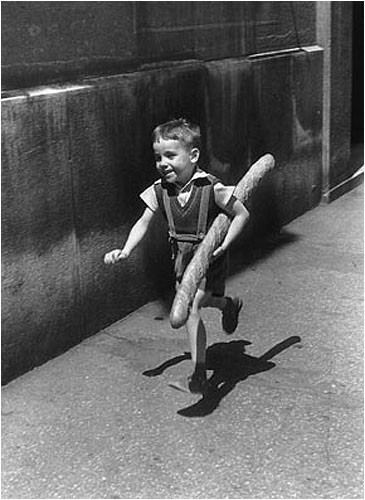
Robert Doisneau.

Chasseur d’images.


What the eye had not yet caught, but that captures the image.


“I feel euphoric to observe… until I can no longer.”[1]

 “You arrive at a place, I like, there is something… there is a crucial moment when everything is in harmony, among all around… Then people come into the photo and click, it’s done!

It’s very stressful, when I snap the picture, because : will I lose it ? …no, it turned out well!”


Moved away at a very young age from his family and the suburbs which “…I hated to the point of wanting to destroy it…” Doisneau remembers, at twenty-two he meets Pierret and they decide to get married right away : Robert works taking his wife with him, and soon their two children, Annette e Francine as well as brothers-in-law, friends like a lively tribe from which he will never part.

Those are the years, between 1934 and 1938, of his job as a workman in ‘Renault’.

“Renault has not at all sense of humour – Robert comments about his employer – and is able to govern only striking terror into others…” But Monsieur Renault doesn’t like the photo reportages in his factory and, above all, the criticism of the ‘system’, the frequent absences to run to the photo lab to develop films, and so the dismissal comes. However Doisneau begins to take ‘photography’ seriously and from those occasional photo reportages he sold to newspapers, he is able now to get more permanent jobs.


It is already the time of Nazi propaganda, and then of what Doisneau calls “the fucking war…” He works together with a partner, Paul Baravet said Babà who goes touring Paris by bike to bring photos to clients and who, with his innocent air, is able to save many of them from deportation and from concentration camps. Robert always refused to photograph what cannot be said, also in his most toughest photos the light aspect of life prevails.


There is “…a lot of poverty everywhere and bitter life in Paris, but you can think that people know how to have fun”, he also comments coming back to photograph the suburbs, and he looks carefully at new dimensions, colours.

“In order to apologize, they coloured…”, he says never being caustic.


The eye doesn’t catch immediately what makes the ‘image capture’ : it is only later, when developing a film in one’s laboratory, that ‘one’ detail collected by the before recording it, finally becomes clear. And Robert realizes that only after comparing the result with what he didn’t remember to have seen.

Some time later, when ‘Humanist photography’[2] – which is already a concept of life and of everyday life - will born, Doisneau will name for the first time ‘the optical unconscious’ which can orientate towards the ‘catching’ by the eye that captures the image, and that is secondary as a matter of fact to the skin contact.


“People in the States dance keeping at a certain distance…”, Robert observes quite amused during his stay there in the ‘80s, when he already works for ‘Life’ magazine.

Those are the years when, right in the States, the photography market was born : Doisneau presents his own ‘portfolio’, curated by Monah Gettner, an actress featured in the documentary-film “Robert Doisneau, le rèvolte du merveilleux”.


Doisneau’ work will be unexpectedly collected by the greatest U.S.A. photographers who will also become excellent interpreters of the new Art.


“You snap a photo – Robert Doisneau said – and it’s already in the past.”


Marina Bilotta Membretti / Cernusco sul Naviglio - November 29, 2019

TutorSalus.net - Freudian journalism 


[1] The quote, as the following ones in this article is taken from “Le rèvolte du merveilleux” (2016), documentary-film by Clementine Deroudille and, beyond Clementine Deroudille, with Eric Caravaca, Sabine Azèma, Quentin Bajac, Jean Claude Carriere.

[2] The ‘Humanist photography’ was born in ‘30s with Henry Cartier-Bresson (1908-2004) : “the subject is ‘man’, man and his short, fragile, threatened life…” It becomes then a social and public phenomenon in 1950,  just finished the 2° World War with “Le Baiser de l’Hotel de Ville” by Robert Doisneau, published withou noise on the U.S.A. weekly “Life”, to which Doisneau already collaborates : this photograph indeed will become the Manifesto of a new trend. Doisneau will gain fame among the general public with the Exhibition created in New York in 1955, “The Family of Man” at care of Edward Steichen.

Stephen Hawking(1).

Me, You, and the Universe.[1] 

Above: Stephen Hawking in a screenshot taken during a zero-gravity training session in 2007 at the 'Shuttle Landing Facility', NASA – 'J.F. Kennedy Space Center' Airport (Florida).


"I have had motor neurone disease for practically all my adult life. Yet it has not prevented me from having a very attractive family, and being successful in my work. This is thanks to the help I have received from my wife, my children, and a large number of other people and organizations. I don’t regard myself as cut off from normal life... I don't feel disabled, but I think I am just affected by certain malfunctions of my motor neurones, a bit like being color-blind. I think it is difficult to describe my life as normal, but I feel normal..."[2]

The publication in 1988 of his ‘A Brief History of Time: From the Big Bang to Black Holes’ remained at the top of the bestseller list for 237 weeks, as also reported by the London 'Sunday Times': this especially surprised Stephen Hawking, and not only because the subject of the book was his own scientific passion.

"Space-time was a topic that intrigued me, I thought it was a 'Fantasy' genre[3] and so I opened that chapter immediately: but as I began to read, I realized that Hawking – contrary to some comments describing him as a rigorous, academic type – asked instead to observe real phenomena which I knew too, using initial skills quite close to mine... He also suggested some flexibility in thinking about space-time, for example as a fabric to work on... I think I can recommend reading it to just about everyone, for his ability to clearly explain complex scientific information in both historical and contemporary contexts, using interesting examples and point by point, that is, schematically..."[4]

"Imagination is a work – Hawking observes – that confronts observation, for example, of the 'regularity' of an event... By observing lunar eclipses, Aristotle understood the interposition of the sun and the moon..."[5] Writing allowed for the recording of data that would otherwise have been forgotten: the first scientists began to write in order to record the movement of lights in the sky. Furthermore, by putting forward hypotheses, for example on the existence of an attractive force between planets, the work of some scientists presented itself as a reliable legacy to lean on: Hawking thus discovers that his spontaneous narcissism would instead be an obstacle to the scientific success he was already beginning to experience.

"This voice synthesizer [6] is by far the best I have heard, because it allows for variation in intonation and does not speak like a robot. The only unpleasant thing is that it gives me an American accent. Now, however, I have identified with this voice, and I would not want to change it even if I were offered a voice with a British accent. I would feel like another person... My youngest son, who was only six years old when I underwent a tracheostomy, could never understand me. Now he has no difficulty. This is a very important thing for me... In my work, I find it a great help to describe my ideas to others. Even if they don't give me suggestions, the simple fact of having to organize my thinking so that I can explain them to others often leads me to new steps forward... Physics is beautiful, but it is completely cold; I could not bear my life if I only had physics..."[7]

"...Simple in his manner, I think that for this reason too Hawking managed to surprise those who expected him to be a difficult scientist...", adds Michela Membretti.

"I just want to have the same degree of control over my life that other people have over theirs... Too often it happens that disabled people have to let their lives be governed by others. No able-bodied person would allow that."[8]

"From an initially religious attitude of primitive humans who did not dare look at the sky, Hawking points out a gradual confidence of the first scientists: they realized that the sun rose every day regardless of rituals or sacrifices, and this increased confidence in their own work of study and observation...", comments Michela Membretti.

"Hawking writes in a simple, clear, balanced way: yet his sympathy is evident for Galileo Galilei who, despite the scientific results he was certain of, obeyed the Church which asked him to stop his experiments. But above all, Hawking expresses sympathy for Albert Einstein, of whom he considers himself somewhat an heir because in 1935 Einstein advanced, together with Nathan Rosen, the hypothesis of space-time tunnels, a precursor to the discovery of 'black holes' and the subsequent 'Stephen Hawking radiation'".

"Today we know that general relativity and quantum mechanics are in contradiction with each other..."[9]

"Anyone who reads science fiction novels knows what happens to someone who ends up in a black hole: they are turned into spaghetti. But the most interesting thing is that black holes are not completely black. They emit particles and radiation at a constant rate. As a consequence of this emission, a black hole slowly evaporates, but it is not yet known what finally happens to it and to what it contains..."[10]

"Past history cannot be changed and alternative histories are not possible... The laws of physics prevent macroscopic bodies from carrying information into the past... The study of gravity and the early universe are the best path toward the possibility of a unified theory..."[11]

"All that my work has shown is that one should not say that the way the universe began was a personal whim of God..."[12]

Pedagogy, in short, which attempts to explain what would not be evident, was of no use to God.


Marina Bilotta Membretti/ Cernusco sul Naviglio - July 11, 2019

TutorSalus.net – Freudian journalism


[1] Stephen Hawking (1942-2018) was a British cosmologist, physicist, mathematician, astrophysicist, and academic among the most authoritative and well-known, famous for his studies on black holes and the origin of the universe. His main contributions were 'Hawking radiation', the cosmological theory called the 'Hartle-Hawking state', 'the multiverse', 'cosmic inflation', and 'galactic formation and evolution'.

[2] Stephen Hawking, "Black Holes and Baby Universes", 1993 - Ed. Rizzoli BUR, taken from the Interview December 25, 1992 / BBC for the program 'Desert Island Discs'.

[3] 'Fantasy' is a broad genre in Literature with varied plots between reality and imagination; it also includes authors now considered classics, such as J.R.R. Tolkien of 'The Lord of the Rings'. 

[4] Michela Membretti holds a degree in Pharmacy and works in a company: this article was born from her suggestion to read Hawking.

[5] Taken from ‘A Briefer History of Time’, Stephen Hawking with Leonard Mlodinow – Ed. Rizzoli 2005. 

[6] 'Speech synthesis' is a technique for the artificial reproduction of the human voice: a speech synthesizer can be implemented via software or hardware. 

[7] Taken from the Interview December 25, 1992 / BBC, 'Desert Island Discs' program, cited. 

[8] Taken from the Interview December 25, 1992 / BBC, 'Desert Island Discs' program, cited.

[9] Taken from "A Briefer History of Time", Stephen Hawking with Leonard Mlodinow – Ed. Rizzoli 2005.

[10] Taken from the Interview December 25, 1992 / BBC, 'Desert Island Discs' program, cited.

[11] Taken from "A Briefer History of Time", Stephen Hawking with Leonard Mlodinow – Ed. Rizzoli 2005.

[12] Taken from the Interview December 25, 1992 / BBC, 'Desert Island Discs' program, cited.

Under dicTation.

The true story of the romanza 'A vucchella' by F. P. Tosti 


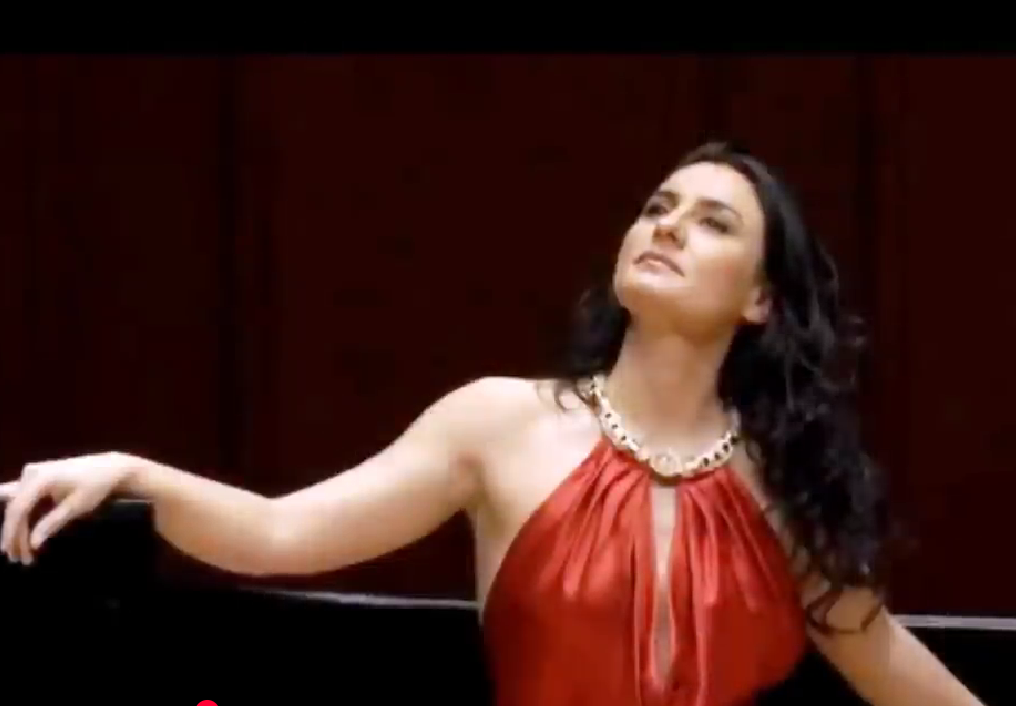
Above: screenshot shared from https://www.youtube.com/watch?v=_9TNWV_fwKk&list=RD_9TNWV_fwKk&start_radio=1


A very pleasant and well-known romance, most often sung by celebrated tenors[1], reached me instead through the beautiful voice and splendid presence of a young soprano whose talent is finally beginning to be acclaimed. It is 'A vucchella’, in the interpretation of Carmela Remigio[2].

The origin of this elegant serenade intrigued me, also because the author does not seem to have made use of it as much as the antagonist who extorted it from him.

In fact, dating back to 1892, there was a challenge that Ferdinando Russo, a journalist for Naples' ‘Il Mattino’, posed to his young Abruzzese colleague Gabriele D'Annunzio, accusing him of not knowing the language of Naples.

We can imagine the fiery Poet vehemently accepting and - from what is still preserved in the archives of the very central and still renowned 'Caffè Gambrinus', in whose salons arguments between literati and the cultured were not infrequent - starting to write on the spot those delightful verses we still enjoy today. However, despite the promise of silence made to D'Annunzio, who feared for his reputation, Russo sold those stanzas about fifteen years later; they were then set to music by the refined composer Francesco Paolo Tosti, he too of Abruzzese origin, and quickly spread to great acclaim.

I thought of Jacques Lacan, the French psychoanalyst[3] who became passionate about Freud - already known in those years well beyond Vienna’s borders - and of that work of the unconscious upon which many contemporaries instead cast envious shadows. Lacan's technique in analytical work remains a 'must' for psychoanalysts until today, and his unprecedented competence was revealed by his Seminar titled 'The Freudian Thing'[4], in which he indicated 'the inaccessible' as the lemma reported by patients in analytical work, around which the very difficulty of a work unfolds.

"Thus, the functions of mastery, ...establish on the foundation of a libidinal alienation the development that follows..." - Lacan says in the text, adding: "The identification of ‘I’ with the Other precipitated in the subject has the effect that this distribution never constitutes a harmony, even a kinetic one, but is instituted on the permanent 'either you or me' of a war in which the existence of one or the other is at stake..."[5]

"However, it is in this register that the systematic analysis of defense is uttered. It is corroborated by the semblances of regression. The object relation provides its appearances, and this forcing has no other way out than one of the three revealed in the current technique. Either the impulsive leap into the real... Or the transient hypomania through ejection of the object itself... Or in that kind of somatization that is hypochondria 'kept to a minimum'..."[6]

Remaining within neurosis, in short, without working about it, the patient is left with no choice but to passively accept that rigid alternation so finely detailed by Lacan.

D'Annunzio, therefore, while rapidly constructing this enchanting song, patiently submitted to the laws of ‘Es’[7], which dictated to him without alternative—as in an "either you or me" war—the words that were to escape Consciousness, bewitched by their evocative sound. A desire—that of turning himself into an object of enjoyable courtship—which the Warrior Poet, reputedly an unstoppable lover as well as a diligent combat pilot[8], would never have revealed except in such an odious condition.

The oneirism, as we know, feeds even art—and not only poetic art—but nothing forces it except one’s ‘desire’.


Marina Bilotta Membretti/ Cernusco sul Naviglio – May 16, 2019.

TutorSalus.net – Freudian journalism


[1] Enrico Caruso, Roberto Murolo, and Luciano Pavarotti are the most well-known, but not the only ones.

[2] Carmela Remigio is an Italian soprano. In 2016, she received the prestigious "Franco Abbiati Prize of Italian Music Critics". "'A vucchella" is part of her album "Arias" (2010).

[3] Jacques Lacan (1901-1981), a psychiatrist and psychoanalyst, founded the Societè Francaise de Psychanalyse in 1953 with Daniel Lagache and, in the same year, began the 'Seminaire' that would give its name to a famous series of publications.

[4] 'The Freudian Thing. Meaning of the Return to Freud in Psychoanalysis' / Amplification of a lecture delivered at the Neuropsychiatric Clinic of Vienna on November 7, 1955. In "Écrits", translation edited by Giacomo B. Contri, Einaudi Publishing 2002 – Vol. I, pp. 391-428.

[5] 'The Freudian Thing' in "Écrits", translation edited by Giacomo B. Contri, Einaudi Publishing, Vol. I p. 420.

[6] 'The Freudian Thing' in "Écrits", translation edited by Giacomo B. Contri, Einaudi Publishing, Vol. I p. 421.

[7] The ‘Es’, which does not coincide with the unconscious, stands in contrast to the Superego: Freud discusses it, for example, in "The ‘I’ and the ‘Es’” (1923), Biblioteca Bollati Boringhieri.

[8] Gabriele D'Annunzio (1863-1938) was an Italian writer, poet, journalist, soldier, and politician who symbolized Decadentism. During World War I, at the age of 52, he obtained permission to participate in naval and aerial actions and subsequently led the occupation of the city of Fiume, which had not been assigned to Italy (1919-1921). Despite being among the first signatories, along with Filippo Tommaso Marinetti, of the 'Manifesto of the Fascist Intellectuals', he never held a membership card for the National Fascist Party.

Reliability : an unpredictable reason in thinking.


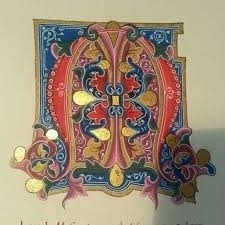
<A ‘drop cap’ is the beginning consonant, or vocal of the first word in a written text and in the ancient medieval manuscripts the ‘drop cap’ was larger than the other letter, and opulently decorated>


I was reading a specialistic journal article (1) and happened thinking, with some pleasure, that ‘behaviourism’, leading the traditional but obsolete ‘Game theories’ is at last beginning to care of Political Economics decisions in one, of a group of Countries, as they are able to guide the public opinion and then the individual investment, saving and consumption decisions too.


Frailty in ‘behaviourism’, which - by means of the ‘Game theories’ - is un-ascribing any single man or woman and the whole society as far as economical decisions, from individual to aggregate, are concerned, is now evident in the present difficulty to forecast the behaviour of individuals who are more and more trained and competent.


The article I’m just reading points then a criticity in Central Banks of a Country, or group of Countries in orienting those behaviours which, even if collective, move from individual choices indeed on the base of available information : it seems convenient to emphasize here that, notwithstanding also the Central Bank of a Country, or Nation, is an Institute and then a body in favour of which different competences do work and cooperate in a specific required scope, it is the President of the Central Bank to be charged with a single political orientation – ‘monetary’ here – toward the whole national, and also supranational community. 


The authors, whom results in terms of mathematical formulations have been here named, consider a currency crisis in a Country, as mainly induced by the expectations of citizens - savers, consumers, investitors of a Country – able to read what the Central Bank, and its President, decides. 


A Nation then, where suddenly the stock of currency does shorten due to not enough profitable ‘domestic’ titles, can incur in more harmful consequencies when decide, by means of their Central Bank to open to a devaluation of their own currency.


The same outcome can obtain the decision to devaluate, when made by a Central Bank unable to afford economic and political costs connected to higher interest rates able, on another hand, to attract savers and investors.


In both these cases, what is crucial is the structure of national market not so simple indeed as able to ascribe specific and different values to the rate of interest, so that it is not easy to forecast the consequencies of a ‘technical’ devaluation. 


An individual competence about the fundamentals (2) of a Country can then vanify simplicistic and consequently abstract, because they don’t supply with reasons – both of concomitance and competition  of national and supranational conditions able to anticipate a currency crisis.   


Under conditions of competition, a minimum signal like a variation of national rate of interest can already contribute to increase conveniently the competence itself and maybe also a social and political sharing.


As a matter of facts, any individual thinking logically moves by reliability, thanks to which anyone can ascribe peacefully his own, or her own, satisfaction or, on the opposite, un-satisfaction. Nothing to do with any ingenuous and hazardous ‘behaviourism’ which dictates : ‘reaction action’.


Buti t is the freudian logic : a whole other world. 


Marina Bilotta Membretti - Cernusco sul Naviglio March 13, 2019


1'Self-fulfilling currency crises : the role of interest rates', di Christian Hellwig/Università Los Angeles-CA, Arijit Mukherji/Università del Minnesota, Aleh Tsyvinski/Università di Harvard, Cambridge-MA e 'National Bureau of Economic Research'. The article is the profit of the scientific debate in progress about the forecast of economic events in globalization, which for the first time saw participation of economists from Deutschland (Budapest, 'Society for Economic Dynamics', Annual meeting).

2 Fundamentals of a Nation are, for example : trade balance, aggregate public budget, investment growth rate.


Cookies user preferences
We use cookies to ensure you to get the best experience on our website. If you decline the use of cookies, this website may not function as expected.
Accept all
Decline all
Analytics
Tools used to analyze the data to measure the effectiveness of a website and to understand how it works.
Google Analytics
Accept
Decline
Unknown
Unknown
Accept
Decline
Save