

The public debate, including culture, theatre and cinema through the economic perspective of the Freudian journalism.
Events
Unapproachable to conscience[1].
‘Aurora’ (1948) by Salvador Dalì.
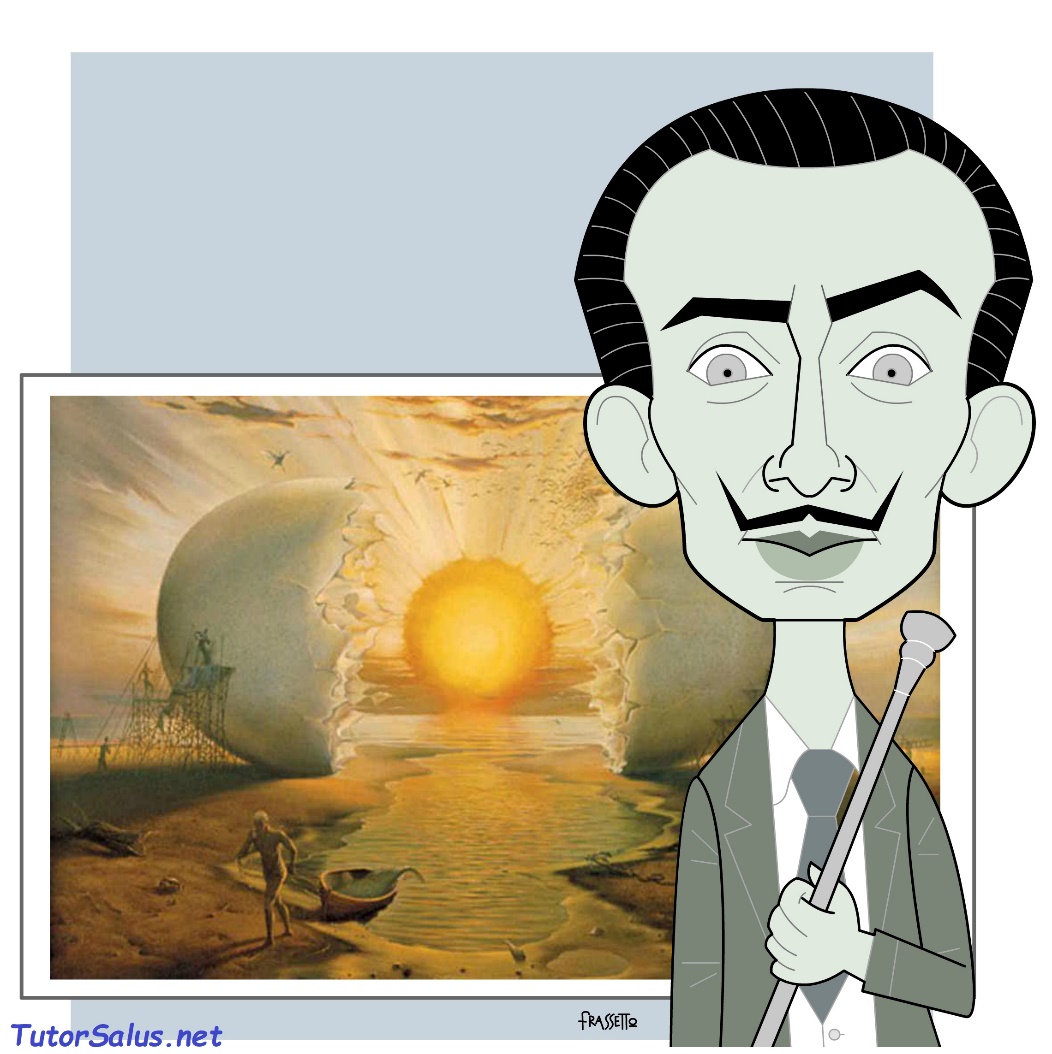
“…My ruthless and patient painting[2]”, Salvador Dalì has been admitting. Original painting by Stefano Frassetto[3]
I found out Salvador Dalì only recently and thanks to Facebook, where often good authors are hosted : here I’ll tell about his ‘Aurora’ (1948) which by me can well assert Dalì, otherwise criticized as often happens to someone able to be noted with good reason.
“…I believe that the time is near when, through a paranoic and working process of thinking, it will be possible (concurrently with the automatism and other passive conditions) to systematize the confusion and contribute to a total discredit of the world of reality[4]”.
The biggest sun of a radiant aurora appears behind eggshell-clouds breaking in the sky, while diligent workers climb on its surface and, slinged not to slip, do their best to scratch it. The two halves of the shell are also the two halves of a fragrant small white bread, and the sun a fresh egg yolk, and the profile too of a flourishing daisy : in front of such a wealth the sailor who was taking off with his boat, is running away terrified in the opposite direction.
“Today I declare that the new sexual appeal of women will depend on the possible use of their spectrum attitudes and resources, that is to say on the possibile their dissociation, bright carnal de-composition. The rainbow-coloured spectrum sets itself against the ghost (still performed by that homesick chemist of a country town so much resembling, desperately, to the other prosaic and diabetic ghost named Greta Garbo). The spectrum woman will be the dismantlable woman[5]”.
All the painting elements really make up an ironic performance, light and serious at the same time : Salvador Dalì looks incredulous at the terror driving any scientific discoveries and giving rise to cruelty, since the revolutionary atomic and quantum energy were soonest used for unimaginable devastations[6].
“I’ll not insist on what today it seems to me absolutely unacceptable, not only a poem, but also any literary production not responding to the anti artistic notation, loyal and objective of the world of facts, whose occult sense we’re still asking and looking for the revelation… Neither is the moment to fervently praise the photographic evidence, but to wander without a method on paths of unintentional, and notice the simple fact that the reason is becoming more and more the essential element in the knowledge field …[7]”
A thought definitely anti-artistic, anti-lyric anti-decorative is present indeed in the epiphany Dalì called ‘Aurora’, as any epiphany is not generalized until is individually recognized, coming out from darkness of a crowded night with the same delirious dreams which at morning we are conscientiously building, looking for hostility all around us. The good genius of Dalì was meeting the diabolic Picasso[8] and let himself be laughed at, due to his own affective fidelity and his disarming frankness.
Here however he dares to point out that our conscience ‘knows’ how to take back to a faultless justification perversion and paranoia by which so often we face the new and the unpredictable, until we do our famous existential doubt, invalidating but absolutely ‘natural’ for humans : an obsession indeed, able to crumble our experience, as far as the delirium itself.
“It was just a dream…!”, is the common saying of our clichè.
Marina Bilotta Membretti, Cernusco sul Naviglio – January 7, 2021
[1] “One day I’ll have to write long, maybe a book, on a character named Eugenio Sanchez, to whom I was linked as a friend during the nine months of my military service. To that extraordinary man, of whom unfortunately I’ve lost any trace, I owe some of the richest hours in my life and, moreover, the reading of a few most interesting texts. The man I’telling about was a carter by trade and absolutely uncultured; he could only read and write : however I could understand myself with him, better than with anyone else and right about on most unapproachable items, not only to our language but also to our own conscience”. Cited by : “Perverso e paranoico. Scritti 1927-1933”, Salvador Dalì 1971 ÉÉditions Denoël – original title ‘Oui’ / Ed. ‘il Saggiatore’ Milano 2017, p.96-97
[2] “Perverso e paranoico. Scritti 1927-1933”, Salvador Dalì 1971 ÉÉditions Denoël – original title ‘Oui’ / Ed. ‘il Saggiatore’ Milano 2017, p.234.
[3][3] Stefano Frassetto is born in Turin in 1968. After his degree in Architecture at ‘Politecnico’ he begun as graphic novelist for local magazines. In the ‘90s he edited in France too, on ‘Le Réverbère’ and on ‘Libération’ : then he created ‘Ippo’ for ‘Il Giornalino’ and then the stripe ‘35MQ’ for the swiss magazine ‘20 Minuti’. In 2000 he came into ‘La Stampa’ as portraitist for cultural page and the insert ‘Tuttolibri’, then for the weekly ‘Origami’. Today he works also for the swiss magazine ‘Le Temps’..
[4] “Perverso e paranoico. Scritti 1927-1933”, Salvador Dalì 1971 ÉÉditions Denoël – original title : ‘Oui’ / Ed. ‘il Saggiatore’ Milano 2017, p.132.
[5] “Perverso e paranoico. Scritti 1927-1933”, Salvador Dalì 1971 Éditions Denoël – original title : ‘Oui’ / Ed. ‘il Saggiatore’ Milano 2017, p.201
[6] Hiroshima and Nagasaki atomic explosions of August 6 and 9, 1945.
[7] “Perverso e paranoico. Scritti 1927-1933”, Salvador Dalì 1971 Éditions Denoël – original title : ‘Oui’ / Ed. ‘il Saggiatore’ Milano 2017, p.95.
[8] “…I twill be then natural that, when his fierce eyebrows (Dalì refers to Picasso, editor’s note) once more shoot the poisoned arrows of the objective world of his outward Saint Sebastian, he is the last one to be informed about the physical pain he does cause”, cited.by : “Perverso e paranoico. Scritti 1927-1933”, Salvador Dalì 1971 Éditions Denoël - titolo originale ‘Oui’ / Ed. ‘il Saggiatore’ Milano 2017, p.232. ‘Saint Sebastian’ is also the title of an essay Salvador Dalì published on the magazine ‘L’Amis de les Arts’ (1927).
Raffaello Sanzio.
The laboratory house where Raffaello Sanzio[1] was born.
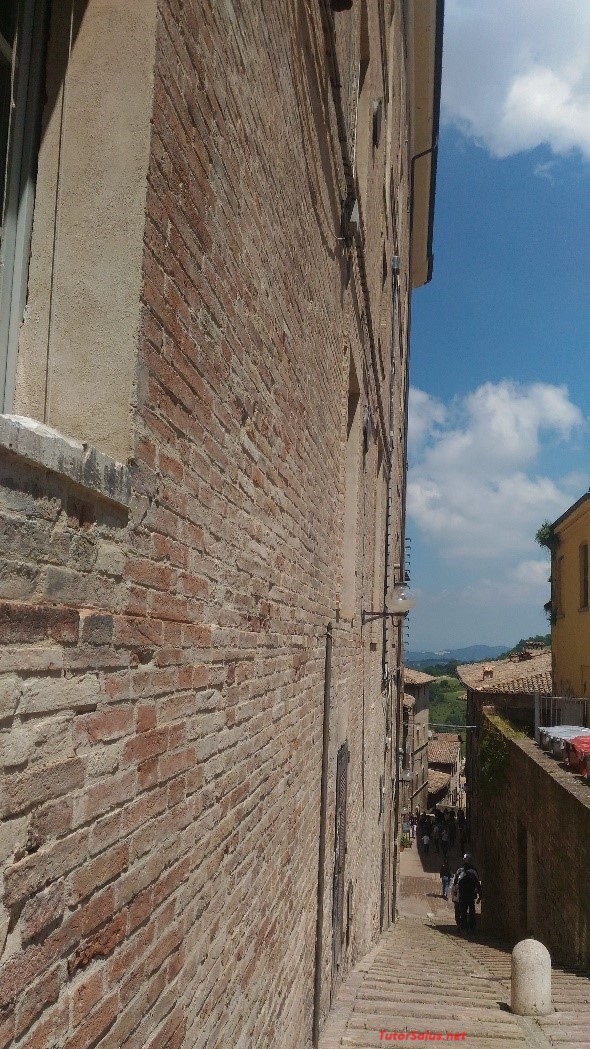
In the picture : Urbino, leaving the Albornoz Fortress towards Raffaello Sanzio’s birthplace. The Fortress was built between 1350 and 1370 at the behest of the cardinal Egidio Alvaros de Albornoz, and already in 1375 had to resist the siege of Antonio da Montefeltro who claimed the city handed over to him by people rebellion.
On the first floor of the birthplace in Urbino, there is a fresco in the room where Raffaelo himself was born in 1483[2] : a young woman reads with an absorbed look and almost forgets about the child sleeping on her legs; it cannot go unnoticed, indeed it immediately indicates the author, passionate and shy, who was Giovanni Santi, Raffaello’s father and mature spouse of the young Magìa of Battista Ciarla[3].
Raffaello, who was weaned in this room and played until he could go down to his father’s workshop – where he began to learn the job very early and precisely from the older collaborators to whom he was entrusted – learned of the marital bound, about which he had no doubts in the years to come, even from that simple fresco by his father : the fresco is known as ‘Madonna di casa Santi’ and confirms the competence of the young wife, also in their neighbourhood.
Orphaned at just a few years old, first of his mother and then of his father, Raffaello was in fact adopted by his father’s workers over whom ‘Perugino’ virtually supervised, and to whom Giovanni Santi had presented the youngest Raffaello in 1494, for him to work for the Master as an apprentice[4] : at seventeen, therefore, Raffaello found himself master of his father’s laboratory – thanks to his real talent but also to his father’s prudent foresight – and above all capable of obtaining work orders.
If the sketches constituted a precious and indispensable investment for a Master and for his laboratory – so much so that they formed ‘de facto’ alliances when they were lented to other Masters[5] or significant damage when they were sold clandestinely – Raffaello knew well what he intended to achieve for a commissioned portrait : so that we do not find in his many Madonnas the same intense gaze of the young woman portraied by her husband in their marital rooom, although we are equally admired in the commissioned works by the unique and refined colours that distinguish Raffaello’s painting and the perfection of his drawing.
With a surprising, but reasonable reinterpretation for the working methods and the environment that they both frequented, Giovanni Santi would have taken from Piero Dalla Francesca and from his work now known as ‘Pala Brera’[6] (1472) – commissioned to him by Federico di Montefeltro, Duke of Urbino - the conceivability of a ‘politician’ woman, exempt from those formalities and forced care with which instead women were trained and made useless by the courteous Culture.
P.S. I sincerely thank the museum ‘Casa natale di Raffaello’ at Urbino and the ’Accademia Raffaello’ for their advice during the visit.
Marina Bilotta Membretti / Cernusco sul Naviglio – December 29, 2020
TutorSalus.net - Freudian journalism
[1] “Lavamini ed mundi estote” is the Latin inscription that can be read on the wash basin in the courtyard on the first floor that connects the house, with entrance on the main street – now Via Raffaello – purchased by Giovanni Santi in 1460, with the house on the first floor overlooking the narrow Via Santa Margherita, brought as a dowry by Raffaello’s mother, Magìa Ciarla Battista’s, and equipped with a well : the motto speaks of the power of everyone in being able to amend one’s mistakes when they are truly recognized. The laboratory house helped Giovanni Santi to immediately get started working in the Duke’s service as a decorator of painting tables, so that he was subsequently able to transform his activity into the most sought-after ‘painting laboratory’.
[2] Raffaello lived between 1483 and 1520 : 2020 is in fact the 500th since his death.
[3] As still happens in some Countries - in Russia and the ex-Soviet area, but not only – already at Raffaello’s time, women were identified by paternity : and this well beyond marriage.
[4] “…And Pietro (Perugino) who was benign by nature, not being able to fail in that great desire, accepted Rafaello. So Giovanni (Santi) returned to Urbino with the greatest joy in the world and, not without Rafaello’s mother tears and great cries he took him to Perugia. Where Pietro (Perugino), having seen how Rafaello drew, his manners and customs, made with all this a judgement which time proved true…”, p.612 ‘Le Vite de’ più eccellenti architetti, pittori, et scultori italiani, da Cimabue insino a’ tempi nostri. Nell’edizione per i tipi di Lorenzo Torrentino, Firenze 1550’, Giorgio Vasari – Giulio Einaudi editore 2015.
[5] Not only Raffaello Sanzio but also other artists, later even Leonardo Da Vinci, used the same sketch several times, adapting it to the client and to the work.
[6] ‘Pala di Brera’, or ‘Pala Montefeltro’, is located in fact in the ‘Pinacoteca di Brera’ in Milan.
Herod and the principle of pleasure.
…a misunderstanding still socially unassailable.
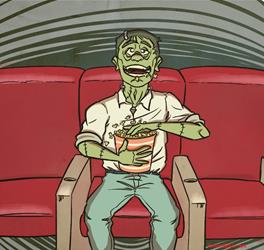
“My patient, who regained his mental health thanks to analysis, fell during the Great War[1], like so many other young men rich in talent and with a bright future ahead.” This note was added by Freud in 1923 to the original text of Notes Upon a Case of Obsessional Neurosis, or The Rat Man case/ Original illustration by Jacopo Ricci.[2]
A misunderstanding - as banal as the biological difference between male and female - has accompanied the principle of pleasure ever since Freud chose to name it, having realized that the removal of that principle was present in all psychopathologies, from the neglected to the severe.
Indeed, the ‘vexata quaestio’ remains socially unassailable as to whether civilization can or cannot coexist with the principle of pleasure.
For, despite being precocious and already present in the newborns, it does not ‘naturally’ degenerate into something harmful or aggressive: except as an individual elaboration - which can be individually corrected[3] - of a sanction which can no longer be imposed upon the humiliation suffered.
Marina Bilotta Membretti/ Cernusco sul Naviglio – December 20, 2020
TutorSalus.net – Freudian journalism
[1] Freud refers to the First World War (1914-1918).
[2] An independent illustrator from Valenza/ Alessandria - Italy, Jacopo Ricci was born in Milan in the 1980s (1988, to be precise). He has always drawn, but dedicated himself definitively to pencils and brushes only after finishing high school. He collaborates with online magazines and creates commissioned works. In 2018, he illustrated ‘Dottor Tremarella’ (a self-published book) and ‘Guarda Oltre’ (also self-published). In 2019, he took up screen printing.
[3] See “Osservazioni su un caso di nevrosi ossessiva, o il Caso dell’uomo dei topi”, S.Freud (1909) in ‘Sigmund Freud – Casi clinici 2’ Edizione integrale di riferimento, 2013 Bollati Boringhieri editore pp.47-136
Not an indifferent reader.
Our brain is not an indifferent reader.
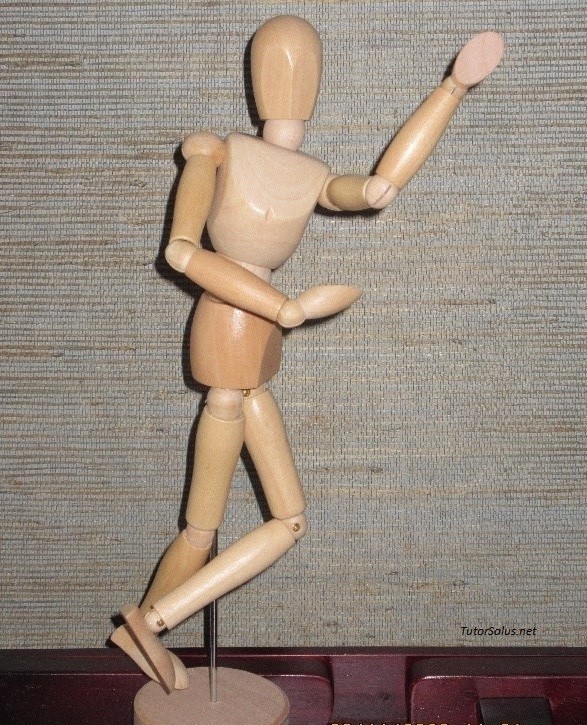
“… Il convient d’introduire ici une distinction, classique en philosophie, entre repentir et remords : le premier reconnaît la faute pour mieux s’en separer, goûter la grâce de la convalescence, le second s’y maintient par besoin maladif d’en éprouver les brûlures…”[1]
‘MEETmeTONIGHT’[2] is the annual review of Universitary Research in Italy and this year had a single macro theme, ‘The future’: the appointment with dr. Laura Musazzi[3] was about the consequences of the stress on the brain, which indeed – in my opinion – proves itself ‘not an indifferent reader’, as it is also able to judge about individual suffering when communicated to our organs in order to activate a defense.
As we know, in each one of us the neurons change physiologically their shape when just facing anxiety and by a progressive contraction of the dendrites, responsible for transmitting signals to the organs : it furtherly seems that the muscle activity – which we give space willingly to, when anxiety begins – can compensate that excessive, or prolonged, contraction we produce when stressed, so to favour the presence of beneficial neurotransmitters, the endorphins.
But I was wondering if the sole muscle activity – which can prove also aggressive other than detrimental as we often learn by journalistic reports – even allows our trained body to produce heavier and more prolonged stress loads, with harmful and then uncontrollable effects.
“Anxiety is not outside of us…” was a fair annotation I heard at the beginning of the ‘talk’, but not sufficient in its definitiveness : infact, when you live anxiety without any other ‘placebo’ than your own muscle activity, even pharmacologically fortified, you can incur in a further frustration, but admissible with difficulty.
I think that if the brain is ‘not an indifferent reader’ of one’s body – we’re finally beginning to know something about – which means that our brain can easily acknowledge what anxiety suggests : that is a distance from an a-sexual model, not at all looking like us and – as our own production of stress shows, physiologically and also pathologically, exposing us to a cross and generalized target shooting.
Marina Bilotta Membretti / Cernusco sul Naviglio - December 11, 2020
TutorSalus.net - Freudian journalism
[1] “La tyrannie de la pénitence”, by Pascal Bruckner – Éditions Grasset & Fasquelle (2006), pp.53-54.
[2] Adhering to the anti Covid19 rules, the review took place online, so offering a number of interesting shortest ‘talks’, each one lasting twenty minutes included questions from the audience, and about specific topics in the five areas of interest, ‘Health’, ‘Humanities’, ‘Smart cities’, ‘Sustainability’, ‘Technology’.
[3] Laura Musazzi is associate professor of ‘Farmacologia’ at the ‘Università degli Studi Milano-Bicocca’, Deparment of ‘Medicina e Chirurgia’ : the ‘talk’ November 28, 2020 was titled ‘Un cervello sotto stress’.