

The public debate, including culture, theatre and cinema through the economic perspective of the Freudian journalism.
Events
Syllables.
'La casa degli sguardi', a film by Luca Zingaretti.
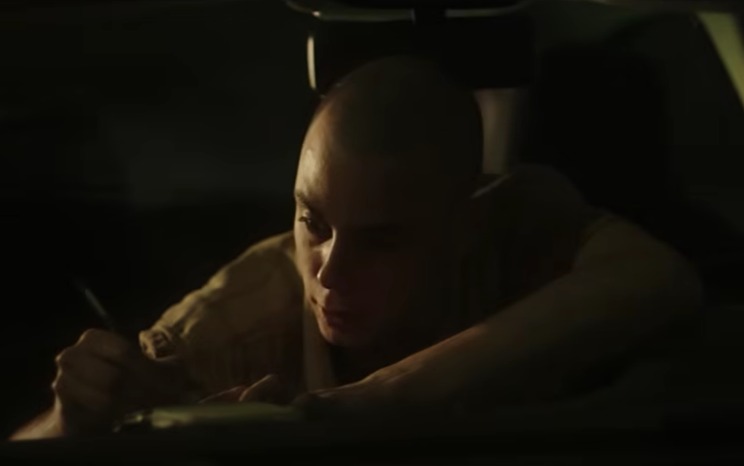
In the photo: a screenshot shared from the trailer of 'La casa degli sguardi' (2024), direction and screenplay by Luca Zingaretti[1]; starring Luca Zingaretti and Gianmarco Franchini. The film is based on the novel of the same name by Daniele Mencarelli[2] (2018).
An excellent debut as a director for Luca Zingaretti, who in this film plays a father, with a freedom that marks lucidity from the novel it is based on, and with a fidelity to the meaning that the director earns as the film progresses, to the point that by placing it alongside the novel, the film necessarily completes it. These are two appointments that the film manages to fulfill and resolve, restoring credibility to the text which, certainly with personal suffering, here becomes however tangled and frayed.
First there is the appointment with the father, which the director revisits by reversing the role inside out, as he plays a man who, although recently widowed, does not give up in front of his son who become entangled in drugs: working in a service cooperative at the children's hospital will be a decisive turning point, the teamwork for the young man is a genuine novelty because the former life, so imaginary and persecutory with fixations and obstinacies will become little by little insufficient and boring, up to leading to a test of a speech that finally will produce listening. "But do you hear yourself when you speak?", his father asks him at last.
And then there is another appointment, certainly not planned: a child hospitalized calls him from beyond the window glass with a gesture, or rather a speech of only three syllables : and it is a super-power the child likes very much because it produces listening to him.
The structure of a language – which is never automatic – can produce listening, and it is an individual power : because it leads the game to the other who received that speech.
Marina Bilotta Membretti / Cernusco sul Naviglio – October 10, 2025
TutorSalus.net - Freudian journalism
[1] Luca Zingaretti (1961), is an Italian actor and director: after attending the ‘Accademia Nazionale d’Arte drammatica’ in Rome and the lessons of Andrea Camilleri, he made his theater debut with the director Luca Ronconi, and then in cinema (‘Gli occhiali d’oro’ – 1987, by Giuliano Montaldo; ‘Il branco’ – 1994, by Marco Risi; ‘Castle Freak’ – 1995, by Stuart Gordon; ‘Vite strozzate’ – 1996, by Ricky Tognazzi; ‘Artemisia. Passione estrema’ – 1997, by Agnès Merlet; ‘Rewind’ – 1998, by Sergio Gobbi) often playing characters who really existed, and also for television (Pietro Nenni in ‘Il giovane Mussolini’) and receiving his first public appreciation. Since 1999 he began playing the police commissioner Montalbano, the protagonist of many novels by Andrea Camilleri, for a long and successful TV series, in the meanwhile continuing the cinematic ativity.
[2] Daniele Mencarelli (1974), is an Italian poet and writer: after making his debut in the magazine ‘clanDestino’ (1997), he published (2001) ‘Bambino Gesù. Ospedale Pediatrico’ for the ‘Tipografie Vaticane’ and then (2013) ‘La croce è una via, poesie sulla passione di Cristo’ for ‘Edizioni della Meridiana’. ‘La casa degli sguardi’ is his first novel (2018), which received very good comments and early appreciation, including being adapted into a film directed by Luca Zingaretti. In 2020 he won the ‘Premio Strega Giovani’ with the novel ‘Tutto chiede salvezza’, and in 2021 he published ‘Sempre tornare’ again with ‘Arnoldo Mondadori Editore’.
‘Electra’and 'l’Amur'.
Roberto Andò[1] director at the Greek Theater of Siracusa.
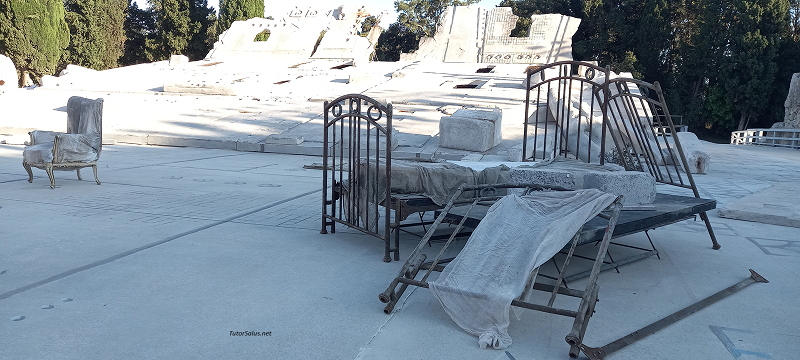
www.indafondazione.org ‘Electra’, by Sophocles (first performance in 410 b.C.) : Direction by Roberto Andò; Translation by Giorgio Ieranò; Scenes and Lights by Gianni Carluccio; Costumes by Daniela Cernigliaro; Music by Giovanni Sollima; Main actors: Sonia Bergamasco, Roberto Latini, Anna Bonaiuto, Rosario Tedesco; Coryphaee: Paola De Crescenzo, Giada Lorusso, Bruna Rossi; Chorus leader: Simonetta Cartìa; With the participation of the students of the ‘Accademia d’Arte del Dramma Antico’ of Siracusa.
Is the parental bed still a conjugal bed ? Electra can’t make up her mind…
But here, of the matrimonial passion – that can only be guessed from the nobility of the initial structure - nothing remains but the ruin of a wrecked, rusty, dusty bed: yet this was exactly what it was, even for her regal parents Agamemnon and Clytemnestra, their marital bed. Desirable, then?
That double bed is Electra’ desperation and her breathlessness, with no other power than to barely touch it, even in a frantic attempt to climb onto it. Electra the shining lady[2], she who attracts with her brightness, here instead dresses the penitent’s sackcloth and ashes: worn rags and waveless hair, hers is the colour of the sand that slips away, not the red of the flame nor the black of the night.
Orestes, the little brother indebted to Electra – a debt that can never be sufficiently repaid – for being saved from death as the only intended male heir, just after the Agamemnon father’s murder, now is a man: Orestes had already detached himself from that parental bed, he is planning a new life, the scepter of Power a cumbersome phallus and not his own.
But That is exactly what Electra is missing, and in all its burdens : her confused and suffering mind does not stops ominous glares and flashes, her laments and her so gray existence indicate and demand sacrifice, attracting affections and fatal bonds to her.
“…Is this really Electra’s famous look ?”[3]
“…This is it, yes.”[4]
“Seeing you overwhelmed by so much suffering…”[5]
“…And with all sort of mistreatment.”[6]
Sophocles is not surely naive, and Roberto Andò takes care of a direction where the good Sonia Bergamasco will never expose Electra to her manipulative responsibilities – but the gods and Fate do not attribute them to her – towards the poor Orestes[7]: who, defeated by the persecution of ‘l’Amur’[8] which never is love, tragically gives in to that one-track mind which is his naive affection for the imploring sister.
And it is Orestes, fully aware, who carries out the double crime which Electra wanted.
Marina Bilotta Membretti / Cernusco sul Naviglio – September 22, 2025
TutorSalus.net - Freudian journalism
[1] Roberto Andò was born in Palermo in 1959, he met and frequented Leonardo Sciascia before arriving at journalism and cinema where he began as assistant of the director Francesco Rosi and then of Federico Fellini, Michael Cimino, Francis Ford Coppola until his debut as a theater director in 1986; between 1990 and 1995 he has been the artistic director of the 'Orestiadi' in Gibellina, Sicily; the first feature film, 'Diario senza date' (1995), presented at the Venice Film Festival, was appreciated by the director Giuseppe Tornatore, who introduced him to a true cinematic debut with 'Il manoscritto del Principe' (1999), which focused on the final years of writer Giuseppe Tomasi di Lampedusa's life, the film was awarded with the Nastro d'Argento as best production: from this moment, Roberto Andò alternated an intense activity of both theatrical and cinematic direction, alongside the publication of novel-essays ('Diario senza nome', 2008; 'Il trono vuoto', Campiello Prize 2012); in 2022 he directed the film 'La stranezza' about Luigi Pirandello, starring Toni Servillo and 'Ficarra e Picone', and in 2025 the film 'L'abbaglio' about an episode of the war of liberation by Garibaldi, again with the participation of Toni Servillo and 'Ficarra e Picone'.
[2] The etymology of Electra is in fact ‘shining, bright’.
[3] Cited from Orestes, line 1177 – p. 159 in ‘Il mito di Elettra, a cura di O. Piscini' – Soc. editrice Dante Alighieri (2009).
[4] Cited from Electra, line 1178 – p. 159 in ‘Il mito di Elettra, a cura di O. Piscini' – Soc. editrice Dante Alighieri (2009).
[5] Cited from Orestes, line 1187 – p. 161
[6] Cited from Electra, line 1196 – p.162
[7] An excellent, surprising Roberto Latini.
[8] J. Lacan, ‘Il seminario - Lib. XX Ancora 1972 - 1973’, Text established by Jacques-Alain Miller, Italian edition by Antonio di Ciaccia / Piccola Biblioteca Einaudi (2011), Chapter 1 - page 6
Sovereignism at fault.
‘Edipo a Colono’[1] directed by Robert Carsen[2] for the Greek Theatre of Siracusa.
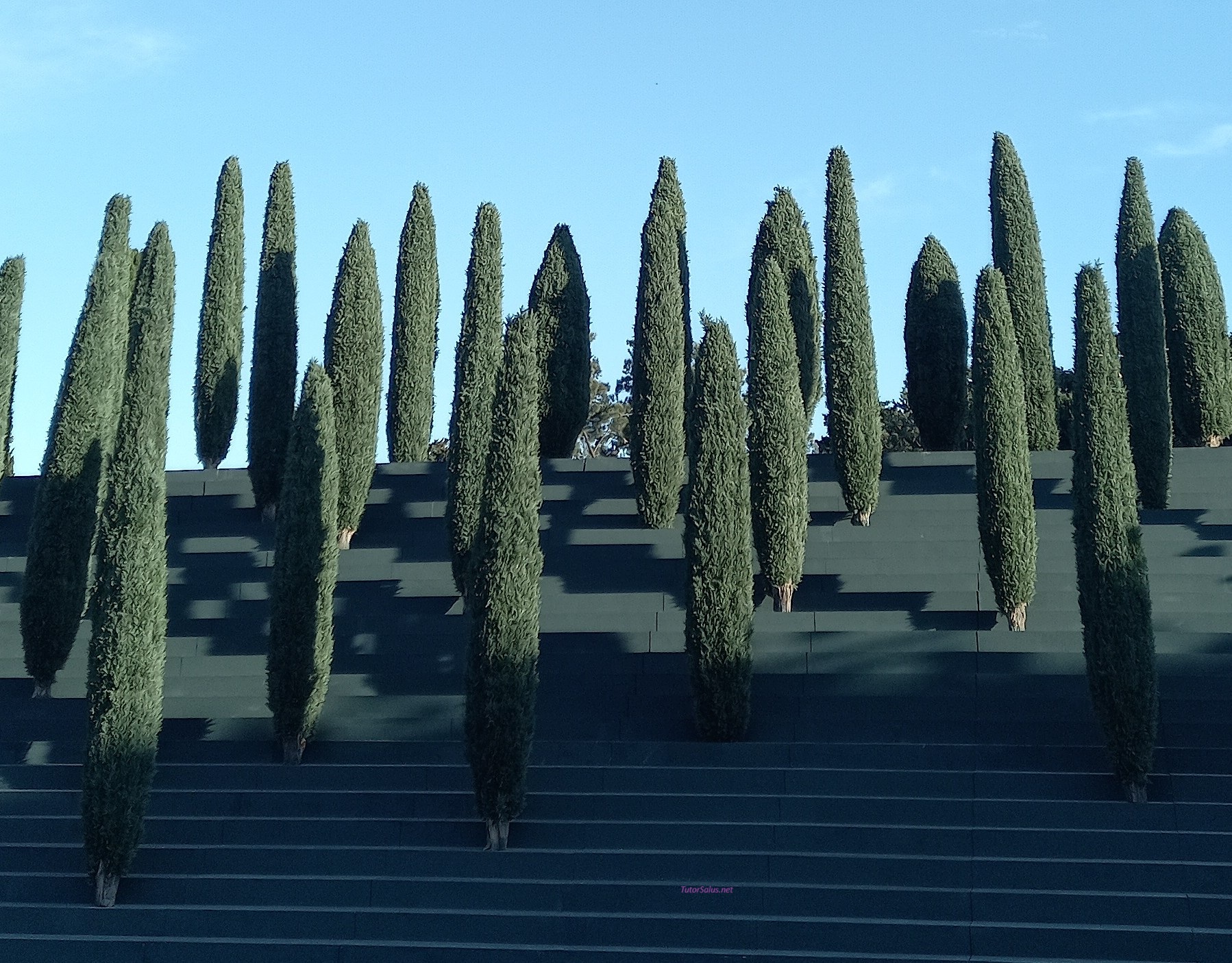
In the photo: the opening that the director Robert Carsen wanted for this 2025 edition of ‘Edipo a Colono’ (Sophocles, 401 b.C.) at the ‘Greek Theatre’ of Siracusa: the grove sacred to the gods, where Oedipus is seeking and obtains eternal sleep, is an army of posts just masked by dark fronds, which even the rustling dress of the Eumenides doesn’t make one tremble.
Faithful to the text by Sophocles, the ancient Oedipus emphatically makes his way onto the scene: he, as a sovereign self authorized not to recognize the sovereignty of others, has already punished himself by blinding for his sins, and no one else will be able to do more, nor the glimmer of forgiveness vibrate in his chest.
It is certain that Oedipus does not seek forgiveness: he, who did not know, obeyed Fate, and this assures him the candor of innocence and the right to the just, pacifying sleep that he has come to Colonus to collect.
Not a formal speech that wouldn't hold up, the fallen king Oedipus stubbornly beats the old fanfare stick that strikes, distracts, and raises. “The crime was partly legitimate... Because I killed, I murdered without knowing. I am innocent before the law: I arrived at that point unaware.” [3]
Sophocles does not attempt to hide the stolidity of this claim, and rather offers the already blind Oedipus to a confrontation to which he remains deaf too. “Poor Oedipus! Not even with age will you acquire reason? You are an insult to old age...” [4] And the immobility of the sacred grove would be perfect for this fallen king if the wound of a call did not come to crack it.
Polynices, Oedipus's eldest son, asks Theseus, the king of Colonus and hospitable to Oedipus, to have "...a brief, non-binding, interview"[5] with his father. “He asks, it seems, to be able to meet with you and then return safely by the same way he came.” [6]
But Oedipus here, though favoured by the gods, now creaks terribly as a human and as a king. “He is my son, king, a son I detest. Listening to him would cost me the keenest pain... His voice, king, is hateful to my ears. Do not force me to yield on this point.” [7]
“...He is your son!”, even the daughter Antigone urges Oedipus. “Even if he had done the most ignoble wrongs to you, you would not have the right, father, to repay evil with evil... Do not look at the present: instead, think back to the wounds that your father and mother inflicted on you; then without a doubt you will understand that blind anger can only produce trouble... Yes, I know: who makes a just request should not insist, but also who has received good should know how to return it.” [8] And indeed the entrance of the eldest Polynices is explicit.
“I recognize that I have behaved like the most infamous of men, regarding your sustenance, father. There is no need for someone else to tell you. But since for every event, Piety sits on the throne next to Zeus, well, let her come to your side, my father. It is still possible to remedy the mistakes made, but one can no longer descend lower. Why are you silent? Say something, my father. Don't send me away. So you don't want to answer me and you will send me away without deigning to say a word, without even explaining the reason for your resentment?” [9] “I ask for forgiveness... because I cannot help it.” [10]
Then the virtuous protagonist that Oedipus begged for himself is instead dragged into judgement, and without being able to claim the royal trappings from which he is immediately stripped.
“You, miserable, you who had the scepter and the throne that your brother now possesses, in Thebes, you drove your father out...: I have only to endure this squalor until the end of my life, without ever forgetting that you are my murderer... Go then, with all my hatred: in me you will no longer have a father, infamous among the infamous... So I curse you.” [11]
Antigone, his daughter, then right says: “My father wanted to die in a benevolent land, and dies alone.”[12]
Marina Bilotta Membretti / Cernusco sul Naviglio – August 16, 2025
TutorSalus.net - Freudian journalism
Please note: from August 20th to 31st www.tutorsalus.net will not be accessible to the public for a technical update: the publication of the articles will resume in September 2025.
[1] ‘Edipo a Colono’, Sophocles (Colonus, 496 b.C. – Athens, 406 b.C. The work was presented to the public posthumously in 401 b.C.). Edition 2025 for the ‘Greek Theatre’ of Siracusa www.indafondazione.org / Direction by Robert Carsen. Translation: Francesco Morosi. Scenes: Radu Boruzescu. Costumes: Luis Carvalho. Music: Cosmin Nicolae. Main performers: Giuseppe Sartori, Fotinì Peluso, Massimo Nicolini, Paolo Mazzarelli, Simone Severini. Choir leaders: Rosario Tedesco, Elena Polic Greco. With the participation of the students of the ‘Accademia d’Arte del Dramma Antico’ of Siracusa.
[2] Robert Carsen was born in Toronto (Canada) in 1954 and since he was a child he demonstrated a great passion for theatre: so he began studying acting, but at 20 years old he moved to England to continue his studies in directing, getting his first job as an assistant director at the Festival of Spoleto (Italy) and in the same time at the Royal Opera House of London, which allows him to collaborate for a long time with the prestigious Glyndebourne Festival Opera; already engaged as an assistant director for the Canadian Opera Company, he stands out as a set designer in 1987 with the National Ballet Canada at the Grand Théâtre de Genève; among his best works we remember: ‘The Nibelung’s Ring’ at Cologne, ‘Eugene Onegin’ at the Metropolitan Opera, ‘La Traviata’ at the Theatre ‘La Fenice’ of Venice, ‘Mephistopheles’ at the San Francisco Opera, ‘Rusalka’ at the Opéra Bastille of Paris, ‘The Knight of the Rose’ at Salzburg Festival; in Germany he directed many works by G. Puccini and G. Verdi until he began a collaboration with the Teatro alla Scala of Milan which still continues; in 2001 he directed the musical ‘Sunset Boulevard’; at the Greek Theatre of Siracusa (Italy) he directed ‘Oedipus Rex’ and ‘Oedipus at Colonus’ by Sophocles; he received many awards and was honoured with the Order of the Legion of Honour (France, 1996) and with the Order of Canada (2006).
[3] ‘Edipo a Colono’, Translation and Notes by Franco Ferrari – Biblioteca Universale Rizzoli (2000), p.317.
[4] Ibid, p. 335 : Creon, the ruler of Thebes and Antigone’s stepfather, faces the fugitive Oedipus to bring him back to Thebes.
[5] Ibid, p. 361.
[6] Ibid, p.361.
[7] Ibid, p.361.
[8] Ibid, p. 363.
[9] Ibid, p. 369.
[10] Polynices cited from the text presented by the director Robert Carsen.
[11] ‘Edipo a Colono’, Translation and Notes by Franco Ferrari – Biblioteca Universale Rizzoli (2000), p. 375.
[12] Antigone cited from the text presented by the director Robert Carsen.
A convincing debt.
‘Amiche mai’, by Maurizio Nichetti[1].
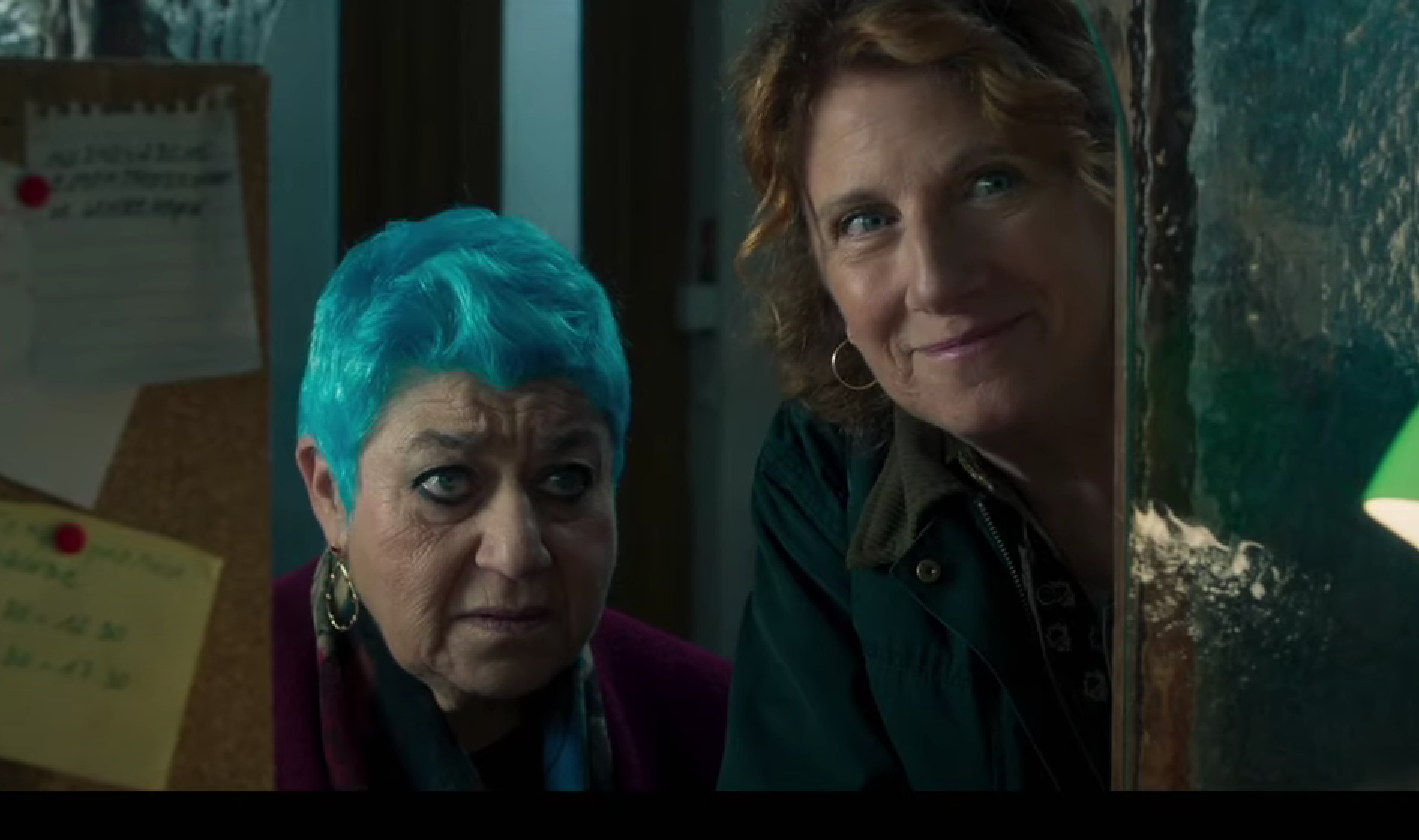
In the above photo: screenshot shared from ‘Amiche mai’ (2025), directed by Maurizio Nichetti. Main actors: Angela Finocchiaro e Serra Yilmaz. Subject: Angela Finocchiaro, Cristiana Mainardi, Maurizio Nichetti. Screenplay: Maurizio Nichetti.
It happens that, when you begin missing the appointments of life, you sometimes go on a diet, even if from time to time you try again, and again, the already repeated model which ignores the other, and maybe you have him, or her, in front of you: what would you call this voluntarism ?
But there’s a subtle crossroads, a negligible delta which seemingly does not make comparable two who take different paths: that’s when we talk about an inexplicable strength – even a Supervisor, but an unknown one – to distinguish the one of the two who does not give up. Except neglecting that he, or she, has a partner – not invisible – with whom there is a debt and credit balance, that cannot be immediately liquidated.
A guilt-free debt and furthermore very possible: because when an offer is collected, this doesn’t generate inferiority but that you tap the deal.
Well, it’s called sustainable debt: because the offer is reliable, and has a horizon at hand. And this is how the debt finds a financier.
Marina Bilotta Membretti/ Cernusco sul Naviglio – June 1, 2025.
TutorSalus.net - Freudian journalism
[1] Maurizio Nichetti (Milan, 1948) with ‘Amiche mai’ returns to directing after almost twenty-five years of silence, during which he was able to maintain a close link with the world of cinema, also through screenplay and teaching. After graduating in ‘Architecture’ at Milan in 1975, he began as a screenwriter for the ‘Bruno Bozzetto Film’ company, also attending a mime course at the ‘Piccolo Teatro’, where he already worked as an actor. He founded the known theater group, ‘Quelli di Grock’, where he himself perfected his mimicry: his first film ‘Ratataplan’ (1979) achieved notable success at an international level too, followed by ‘Ho fatto splash’ (1980), ‘Ladri di saponette’ (1989) and others, while he was busy with television, radio, theater and teaching, which he first carried out at the ‘Centro sperimentale di cinematografia’ – the ‘Animazione’ section in Turin, then at the ‘Università Cattolica’ of Milan, and the ‘Civica Scuola di Cinema’ too, which he directed in 2009-2010. Today he is a directing teacher at the ‘Università IULM’ for the master’s degree course in ‘Televisione, Cinema, New Media’.