

Partner of thinking, and lack. Training as a psychoanalyst.
Thinking as a partner
The war in the head.
“Astarte”, by Andrea Pazienza[1].
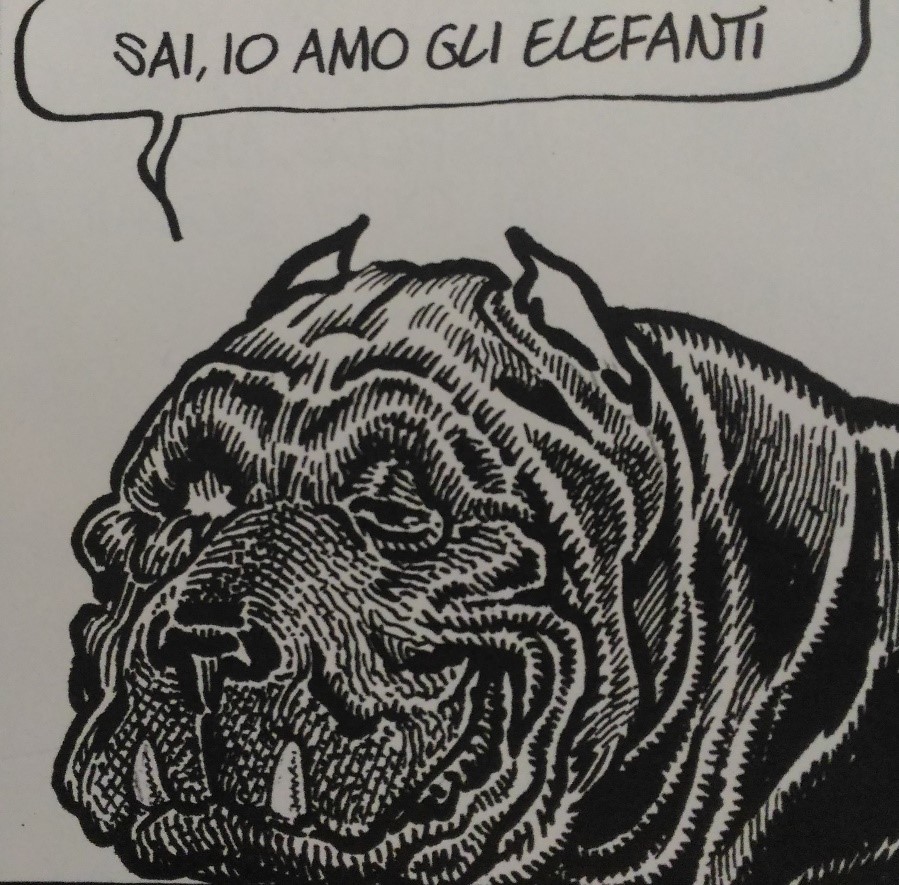
Screenshot from “Astarte”, by Andrea Pazienza – ‘Fandango Libri’ (2010).
Is “Astarte” a dream ? Net, impressive, melancholic.
However it is a pleasure when you look at Andrea Pazienza drawing[2]. I hazard : it is even comforting to think that Paz, as he was called, had found at least some satisfacion, even if from blank sheets of paper and large walls. When you look at him, it seems even easy to follow his suddenly sure hand, intent on making a runaway horse, an armed man, a furious bear.
Astarte is the fighting puppy of Hannibal, excellent African strategist and leader of the Second Punic War (218 – 201 b.C.) : Paz, who comes from a detoxification pathway, gets so passionate about it that he want make out a wonderful story. In 238 b.C. Hannibal had left very young, at nine, from Carthage[3] together with his father, the General Amilcare Barca and his younger brother Hasdrubal, at the head of a mighty army to challenge Rome that threatened them with its power; he had been staying in Italy for fifteen long years, arriving to cross the snow-capped Alps with their African elephants and worrying the Romans themselves, who were already been beaten in Italy several times before deciding to fully commit themselves to annihilate Carthage. As a matter of fact, ‘Storia di Astarte’ relates the preparations and the battle of 217 b.C. won by Hannibal on Trasimeno Lake, as he could take advantage of a local typical mists that enveloped the whole place : since that defeat the Romans decided to change tactic and structure in their army.
And it was already a tradition in any war, for both the opposing parties, to free those enormous dogs, the Molossian from Anatolia enchanting Paz, which were armed with a deadly sword to attack by surprise the horses and the first lined up ranks.
However the giant puppy which is Astarte is likeable indeed, even in the savagery of the battle where, innocent, he is sent. He’s likeable because that youngest patient dog does obey and, differently from the humans who every time make up a new war, Astarte only does what he has been trained to do… “I came back to the cages – Astarte says, exhausted after the battle in the last plate by Andrea Pazienza – where already Baal and a few other dogs were. The proud trainer gave us something to eat and cuddled. While the battle still was raging, me and Baal fell asleep, side by side for the last time…”
The story would have finished at Zama with the first defeat of Hannibal and Astarte’ death but, astonishingly, the narration stops at the victorious battle end. How to reconciliate, infact, the human and introduce it into the story ?
A few days after, the evening of June 16, 1988 Andrea Pazienza died in his beautiful house in Tuscany where he was living with his second wife and their two dogs.
“Comics are an escape… and the word itself, ‘escaping’ is a very beautiful word…” – Roberto Saviano remembers in his ‘Preface’ what Paz said. To be able to tell, infact, Astarte has to approach the author and the author to come inside a little more that giant puppy so far from him, so docile and terrible, so lighthearted and, finally, so cruel.
“…It remains the the handwriting of a child”, Paz admits with reluctance when commenting upon his texts in an interview of 1987[4]. But his graphic sign is not : it was not a child’s sign. “I don’t want to be wrong…” he still says, even better he repeats three times and he appears excessive, as it refers only to something he doesn’t remember in front of the interviewer. “I don’t want to be wrong…” and then again : “I don’t want to be wrong…”
“…For us dogs it’s difficult to come into mens’ dreams, I succeeded with you because I am a very strong dog. And you clearly a very weak man…”, Astarte says to Andrea Pazienza in one of the first plates, here he portrayed himself ugly, with a potato nose and an ordinary look which wasn’t really his own.
Fulvia Serra, former editor of ‘Linus’ who worked together with Paz, comments[5] on Andrea Pazienza’ ability to grasp any tension, any torment from young people, so that appreciation for him still remains today : however, what would be an honour for Paz, instead condenses condemnation, a pressure from many sides, neither collective nor innocent, which would have needed a proper defense, unfortunately not implemented by him.
According to some, he would have revolutionized the comic strip in Italy : according to others, also a ‘genetic’ ability to draw would have made it unnecessary for him to learn, but Paz didn’t disdain it notwithstanding he was easily distracted. Too heavy, intrusive, expensive voices.
Contemporary to him, in the 50s that ‘chicken game’[6] was arising, where the ‘chicken’ was the one who was trying to ‘save’ himself, jumping out of a moving car. And experts today know they can easily predict anything from those who are sensitive to flattery and promotions.
Andrea Pazienza’ biography is a very rapid and exponential hyperbole, between 1977 and 1987 his works were expected and in demand by a number of anxious clients : this young author, shy and perfectionist, who called himself ‘lazy’ has instead passed very quickly through cinema[7], teaching[8], journalism[9]. Paz however offered only whereas a bloody challenge had to be met, a duel which make bleed profusely, a hand-to-hand conscientious and lacerating.
Astarte is a monster with whom Andrea Pazienza maybe would have liked to make peace : but no peace is possible, by keeping the monster.
A totem, as a matter of fact, is not an ordinary enemy.
Marina Bilotta Membretti / Cernusco sul Naviglio – July 20, 2020
TutorSalus.net - Freudian journalism
[1] “Astarte”, ‘Fandango Libri’ (2010) from “Storia di Astarte” (1988) by Andrea Pazienza, Preface by Roberto Saviano.
[2] ‘Fumettology’, October 23, 2014 ‘Rai4’.
[3] “Vite degli uomini illustri”, Cornelio Nepote, Chapter II.
[4] Interview April 4, 1987 by Carlo Romeo, director of TeleRoma56, then broadcasted again also by Rai3 a few years ago.
[5] Andrea Pazienza was 21 in 1977, being born in 1956.
[6] “…In ‘Rebel without a Cause’ (transl.: ‘Gioventù bruciata’, a film of 1955), a few teen-agers in Los Angeles are driving towards the cliff, winner will be who can jump out the car at the last minute”, p.85 “Calcoli morali. Teoria dei giochi, logica e fragilità umana”, by Lazlo Mero - Ed. Dedalo Bari 2012.
[7] Andrea Pazienza is the author of the poster for ‘La città delle donne’ (1980), directed by Federico Fellini.
[8] In the early ’80s Paz had been teaching at the ‘Libera Università di Alcatraz’ (Gubbio-PG), directed by Jacopo Fo.
[9] In 1980 Paz founded the monthly magazine ‘Frigidaire’, which also his friend Tanino Liberatore worked for, former colleague at the College they both attended in Pescara : for ‘Frigidaire’ Andrea Pazienza created the very negative character of Zanardi, but Paz considered his own ‘alter ego’.
“Sigmund… que c’est Freud l’Amur”
The ‘Christ of the tribute’ by Tiziano Vecellio.
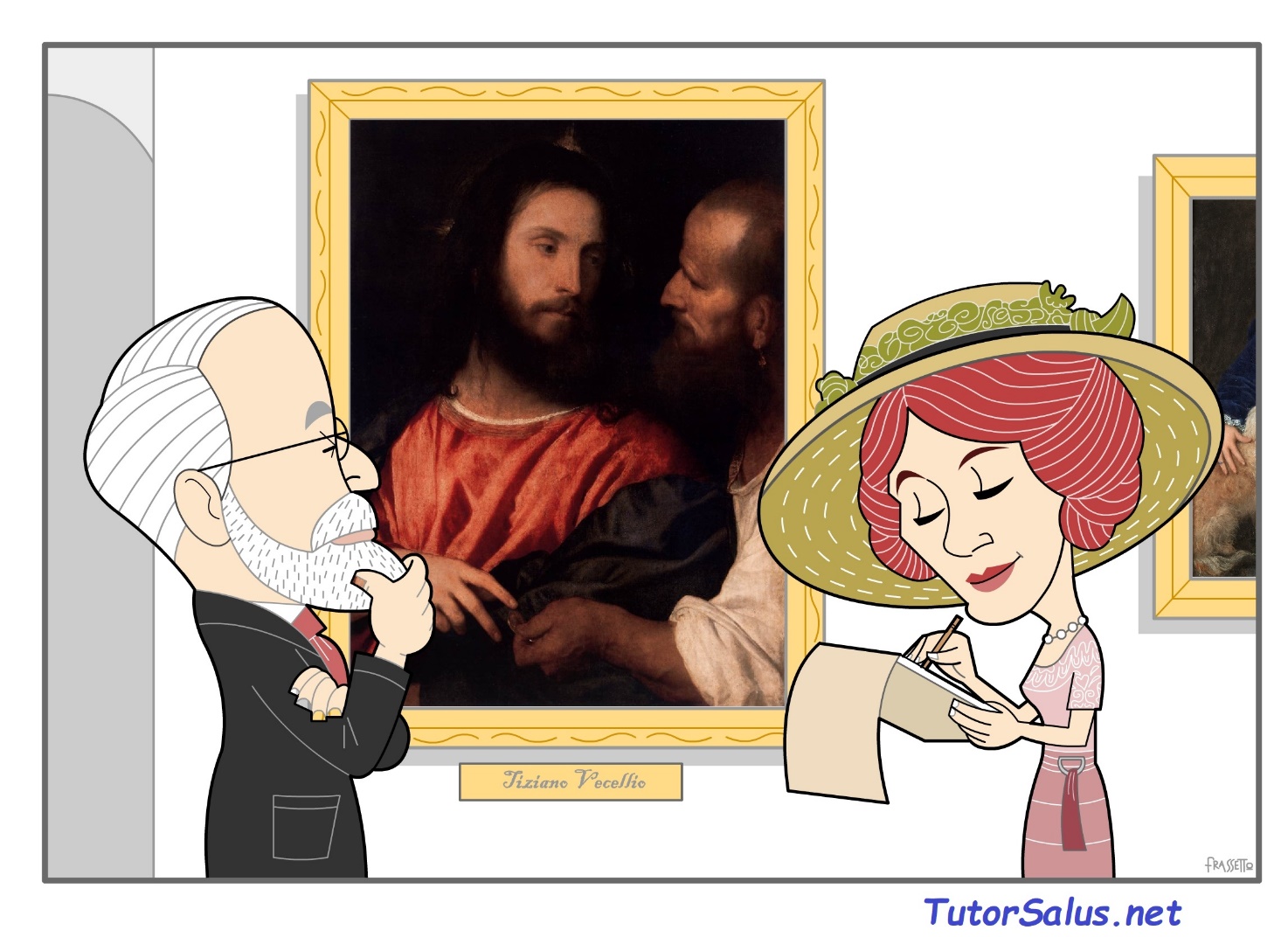
The painting in the background is ‘Christ of the tribute, or of the coin’ (1568) by Tiziano Vecellio (now at Dresden, ‘Gemaeldegalerie’)/ Original painting by Stefano Frassetto[1].
“My dear love, Sigmund Freud, ‘Letters to his fiancée’ (1883).
(…) Another painting enchanted me, ‘Christ of the tribute’ by Tiziano, that I already knew but without particularly noticing it. The head of Christ, my dear, is the only likely one that we can believe had such a man. Even I felt like I had to believe that he had been so important indeed, because the representation is so successful. And in all of that, nothing divine, a noble human face very far from beauty, and severity, innerity, depth, a superior gentleness, a deep passion; if you cannot find all this in that painting, then physiognomy doesn’t exist. I would have gladly taken it away, but there were too many people : young English women copying, or sitting and speaking softly, or walking and watching. Therefore I walked away moved…”
Sigmund Freud, ‘Letters to his fiancée’ - December 20, 1883
edited by Marina Bilotta Membretti / Cernusco sul Naviglio - June 14, 2020 Sunday
TutorSalus.net - Freudian journalism
[1] Stefano Frassetto is born in Turin in 1968. After his degree in Architecture at ‘Politecnico’ he begun as graphic novelist for local magazines. In the ‘90s he edited in France, on ‘Le Réverbère’ and on ‘Libération’ : then he created ‘Ippo’ for ‘Il Giornalino’ and then the stripe ‘35MQ’ for the swiss magazine ‘20 Minuti’. In 2000 he came into ‘La Stampa’ newspaper as portraitist for cultural page and the insert ‘Tuttolibri’, then for the weekly ‘Origami’. Today he works also for the swiss magazine ‘Le Temps’. In 2022 Frassetto published his first comic review ‘35MQ : 2012/2022 Dieci anni di inettitudine’.
Building the city again.
A three-person job.
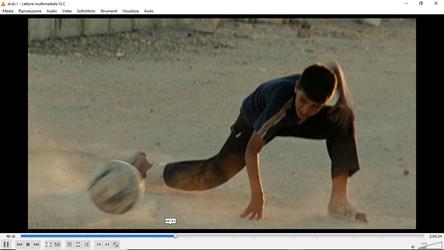
Screenshot from the trailer of the film 'The Hurt Locker' by Kathryn Bigelow (U.S.A. 2008): the young boy Beckham manages to save a penalty kick, winning the bet with American Sergeant Jones.
I start again from Petra[1], an ancient city never forgotten, even if today tourists visit it on organized 'tours' that tell even what would not cross one's mind to ask.
During a work break while filming ‘The Hurt Locker’[2], actor Guy Pearce—Sergeant Matt Thompson, and the first E.O.D. bomb technician to enter the scene—also went to Petra with other members of the crew. He admits with surprise: "Here, people watch you, they don't miss anything you do... Back home in the West, there is indifference[3]”.
The work of an E.O.D. [4] technician is appreciated among the military, but also deeply by those who actually live down there and find bombs literally between their legs when stepping out into the street, buried just beneath old, eaten-away asphalt and stone pebbles. Yet, at the same time, it is a conflicted job, fought rationally and with Conscience by those who truly want those bombs to explode, no matter who gets hurt!
"War is a drug" is the unsettling premise of the film, and an E.O.D. technician is not a hero, in fact. "I wanted to describe the chaos of war...", says Kathryn Bigelow, an intelligent and capable director according to the film's actors, and also the first woman ever to win the Oscar for Best Director in 2010.
"And I wanted to reconstruct 'that' walk, of a lonely man going to defuse the bomb in the middle of the city. I wanted the viewer to take that walk with 'him'... If I succeeded, that was my goal."
"I could only get a fraction of an idea of what an E.O.D. is," confesses Jeremy Renner, who plays E.O.D. bomb technician Sergeant William James in the film. "I wrote pages and pages," he says, "to get inside, to understand...
What is cinema for if not to provoke your thinking or, better yet, multiple conflicting thinking which you didn't have before entering the theater? Or you just pay 11 dollars to be entertained, and you walk out the same as before..."
The film leads us through a surreal and deliberately realistic chronicle-story, but one that is never easy or sadistic. Beckham is the boy from whom Sergeant James buys video games at the market to distract himself after a mission.
"...My name is Beckham" [5], he replies with the boldness of someone who, at just twelve years old, already knows that you must never, 'never', give your identity to the 'enemy'. He accepts James's bet and wins the five dollars promised for saving that penalty kick. And Beckham himself is 'the hurt locker', 'the keeper of what hurts', which for the American military is also the box where objects to be returned to the family are kept when a soldier dies.
Beckham, the child in the hands of 'his' shrewd adults, is indeed near death when James and his squad find him on a makeshift operating table in an abandoned warehouse. Someone among 'his' people clumsily inserted the explosive device into his small chest, and he is dying, bleeding out and useless to the Cause, because even 'that' bomb will be defused by the 'enemy' technician.
But James, after 'this' mission, cannot manage to leave. Alone on the street, he imagines bringing the child back to his family—who isn't there—or at least finding those who wanted to transform him into a body-bomb, as he calls it. Instead, he calls his wife, who answers from the United States holding their few-months-old baby... He cannot utter a word, but it is his wife's voice, it is 'his' home, it is something.
The filthy merchant leaves him in front of a middle-class house, furnished in a Western style. James enters like a thief and finds himself in front of the master of the house: elegant, a professor with an incomprehensible name, who says he knows many languages and invites the American sergeant to make himself comfortable—he is a guest, right? But 'about Beckham, no, he knows nothing...' In his locker under the bunk, along with fragments of the defused devices—eight hundred and seventy-six he had counted—the American sergeant also keeps his wedding ring.
"She is faithful..." he confesses to his comrades who ask him. And she is also the only one to whom, having returned home to the United States after the deployment that does not force him to go back down there, he can say: "They are short on bomb technicians...".
And she, once again, understands. If war is a drug, as the official commentaries on the film state, two languages and messages are offered to the viewer here.
One of them, however—and a truly grave one—can continue to remain encrypted, repressed, or deliberately misunderstood by those who won't even applaud because the story is not sensational, not catastrophic, not exciting enough...
And that message is that war is consoling—the true consoling 'drug' for those who do not take a single step to build peace in their own lives, and to whom a city and the people living in it do not matter, except as objects to keep or to discard.
Hands can think, as a matter of fact: no human, not even an expert bomb technician, can ever be a robot.
Marina Bilotta Membretti/ Cernusco sul Naviglio – June 7, 2020
TutorSalus.net – Freudian journalism
[1] Petra, ‘The Variegated’—as it was called in ancient times due to the vivid colours of the rock layers—is still located in Jordan, south of Amman. At the center of a vast desert area where the only water comes from rainfall, it possessed an exceptional water network of cisterns and channels carved into the subsoil, which the Romans used as a tool of pressure to eventually subjugate it. It was abandoned in the 8th century and ‘rediscovered’ only in the 19th century. The city of Petra is mentioned in the ‘Qumran Scrolls’, among the oldest surviving copies of biblical books (40% of the identified documents) dating back to the period 150 b.C. - 70 a.D. These documents were found in the West Bank only between 1947 and 1956, and they bear witness to Late Judaism, meaning the Jewish Civilization following the destruction of the Second Temple, which was itself the reconstruction of King Solomon's temple.
[2] Presented in Venice at a preview screening in 2008 during the ‘Venice International Film Festival, ‘The hurt locker’ won six Academy Awards in 2010 for Best Picture, Best Director (Kathryn Bigelow), Best Film Editing, Best Sound Mixing, Best Sound Editing, and Best Original Screenplay (Mark Boal, journalist).[3] The dialogue fragments reported here are taken from the 'backstage' of the film.
[4] E.O.D. stands for ‘end of discussion’ (meaning ‘case closed’ or ‘I don't want to hear another word’) or ‘end of day’, indicating something that must be finished by the end of the workday. However, in the Army, it refers to a volunteer technician expert in Explosive Ordnance Disposal. In the movie, the ‘Bravo Company’ squad consists of three soldiers: two support shooters and one E.O.D. bomb disposal expert who goes out alone to defuse the bomb, or bombs.
[5] David Beckam (London, 1978), awarded as the 2nd best footballer in the world in the 1999 FIFA rankings he is still an icon for many very young fans.
Π pi... the incorrigible.
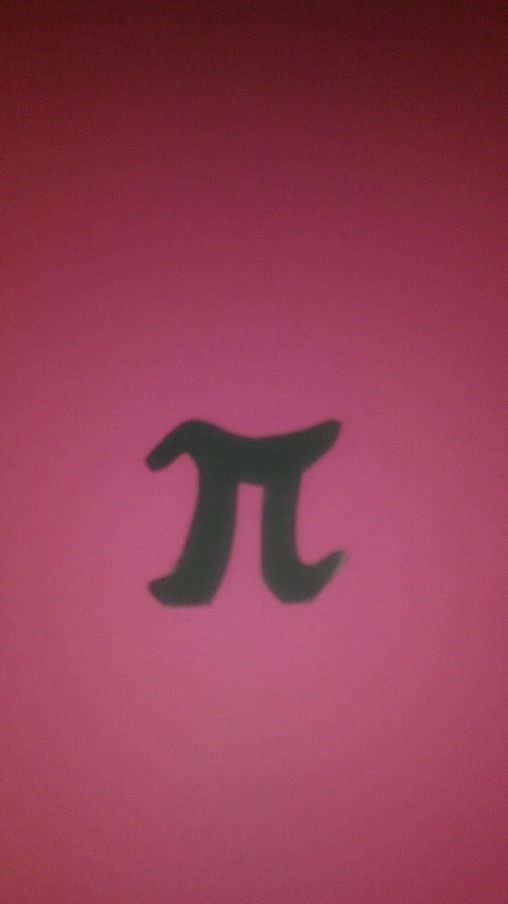
When describing the construction of the huge temple of Solomon[1] king, around 950 b.C., the Bible returns it with a barely accurate value of three : but is certain that it was known already 5.000 years ago, as the ancient Egyptians were able, thanks to it, to draw and to measure the course of the Nile river, whose regular and devastating floods were twisting the geography of the local sites.
However it wasn’t yet named until 1706 when the mathematician William Jones, establishing his value equal to 3,14159 periodic, called it π – maybe the initial letter of ‘perimeter’ which in Greek language sounds περιμετρος – and Euler[2] adopted the symbol in 1737, so rapidly spreading it as a standard.
Since the beginning described as a numerical ratio, constant and mysterious, between the circumference and its diameter, for dozens of centuries π was singled out as 22/7. You can even say that the most ancient definition of π – able as it was said ‘to link the earth to the sky’ – marked the beginning of the Geometry too, a science not requiring a priori theories but effectively conjugating the abstract figures with the livable reality. The critical issue of the borders – always forebonding of risky enmities – at last did find a solution with the science of Geometry, thanks to the areas and solids measurement which well represented Countries and properties to be defended. If a flood of Nile, when receding had changed the geographic feature, the technical measurements before the event returned the reality and a social peace : but that ratio, so constant and ‘unfinished’ and also connecting every bend, halph-spheric then, of the river with its diameter was amazing any incredulous technician in the ancient Egypt.
More over, they started when reporting to their seniors, and the seniors whispering to the highest officials, and up to the divine Pharaoh, why in that mysterious ratio any string of numbers could be included, any formula and even complex simulation were included, without no explanation at all…
Reality was incredibly of a divine lowered among humans and hidden, although present - who know how long and what other forms - incomprehensible but representable, therefore a mistery and a treasure that the society of the Pharaohs was able to to well sip in the centuries, so granting submission and governing too.
In 1906 as a matter of facts, the discovery of a written page was finally enlightening about the goals achieved using the rule of the lever to calculate areas, volumes and centres of gravity : it was the ‘Letter about the method’[3] which Archimedes[4] of Syracuse, a rare scientist and devoted to the monarch and tyrant Gerone II[5] who couldn’t do without him, wrote to Eratosthenes[6] of Alexandria in Egypt, director of the richest Library, right where Archimedes had studied thank to the subsidy of Gerone.
Studying in Egypt, Archimedes[7] could get to analytical tests, datas and very ancient and precious documents which opened the way to a new method, the one to demonstrate a theory by mechanical entities : covering a spiral, for example, let measuring its perimeter, nearest to a circumference which so linked with any curved line and even to the straight, which is a special case of the curved one. And the point itself, then ? Try to measure it without at least you can imagine to zoom it.
We still wonder that Archimedes couldn’t take advantage of algebraic or trigonometric information, because he derived each of his own results by only geometrical media, then surfaces and solids which allowed him to get to concluding theses, and so finally establishing the ‘infinitesimal calculus’ and the ‘limit’ : the circumference was certainly formed by an infinity of equidistant points from a single centre, but it could be assimilated to an ever increasing number of polygons with equal sides, i.e. very regular and in increasing number, and themselves stackable to the circumference, so prooving measurable and no more mysterious indeed.
A proved scientific nature of the motion became preferable to the incomprehensible and unrelated immobility of an abstract, and divine, a priori.
We can say that π has been able to split its audience between aggressive theorists, who always point out issues still open, and on the other hand users, simply thankful for the service offered by this humble value.
Will this be how we govern ?
Marina Bilotta Membretti / Cernusco sul Naviglio - May 31, 2020 Sunday
[1] J.J.O’Connor / Honorary Senior Lecturer in ‘Computational Algebra’ e E.F.Robertson / Professor Emeritus of Mathematics at ‘School of Mathematics and Statistics’ - University of St. Andrews (Scotland) are the authors of ‘A history of Pi’ / Agosto 2001 : they cite a verse from the Bible which is both in ‘Book I King 7, 23’ and in ‘Book II Chronicles 4, 2’.
[2] Leonhard Euler (1707 Basilea, Swissland – 1783 Saint Petersburg, Russia), mathematician and physicist, often known as Euler.
[3] The page was at first titled ‘The method of Archimedes of the mechanical theorems, to Eratosthenes’ by the researcher Heiberg who found it at Istanbul, mixed to other papers : the paper is also the Premise to the Treatise of Archimedes ‘On spirals’.
[4] Archimedes ( 287 b.C. – 212 b.C.) was born and dead at Syracuse, in Sicily but he stayed for a long time in Alexandria of Egypt to finish and perfect his studies.
[5] He too from Syracuse (308 b.C. – 215 b.C.), Gerone seized power with the support of the popular classes, but he didn’t twist any law or preceeding institution : so that any ‘tyrant’, in a city-state like Syracuse established by former Greek colonists, was accepted in the Greece of VII and VI century b.C. and by the authorities of Athens too.
[6] Eratosthenes of Cyrene (Cyrene, 276 b.C. – Alexandria of Egypt, 194 b.C.) was a mathematician and a famous geographer : he was appointed as Librarian of the Library in Alexandria of Egypt, the most important Library of the ancient time.
[7] I’d like to cite the interesting Exhibition 2019-2020 ‘Archimedes at Syracuse’ with the machinery of Archimedes but wooden reconstructed to be ‘touched’ and very ‘clapped’ indeed, at the ‘Galleria Civica Montevergini’ in Syracuse-Ortigia, attended by Giovanni Di Pasquale and with the scientific advice of G. Voza e C. P. Voza.