

Excellent notes of economic thinking taken from analytical work.
Strawberries
Recovery.
Unconscious comes from the work of Freud as economic principle.
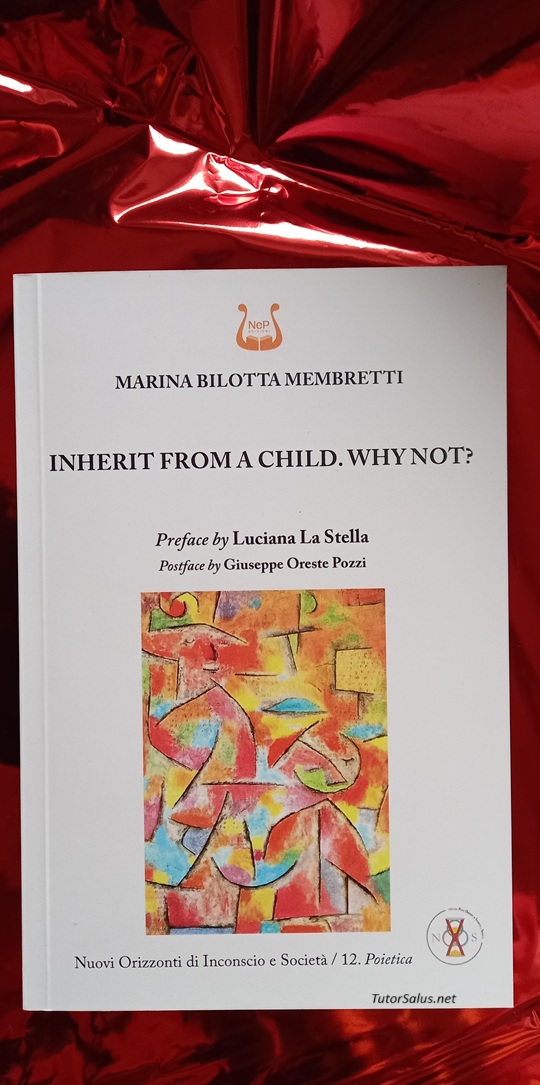
“Neither reaction-formation nor innatism, unconscious comes from the work of Freud as economic principle which, in sanctioning pleasure or displeasure from the reality offered, has a juridical and legal character indeed: the topic that thinking is juridical – we can say ‘I’ – and starting from unconscious, engaged Giacomo B. Contri[1], psychiatrist and psychoanalyst, who pointed out ‘work’[2] as individual competence in the care of one’s thinking.
Ten years after the first edition of ‘Ereditare da un bambino. Perché no ?’ my growing intent for this 2024 second edition is in approaching the legal work of the economic principle that is one’s unconscious, and therefore thinking.”[3]
Marina Bilotta Membretti / Cernusco sul Naviglio – January 8, 2025
TutorSalus.net - Freudian journalism
[1] Analysand of Jacques Lacan (1968), and then graduated in Medicine with specialization in Psychiatry, psychoanalyst he himself and translator of Lacan works (see ‘Jacques Lacan. Scritti’, a cura di Giacomo B. Contri – Voll. I e II, Giulio Einaudi editore 1974 ediz. integrale), Giacomo B. Contri published over the years his own works, specifically about the legal character of thinking, like ‘La tolleranza del dolore. Stato Diritto Psicoanalisi’ (1977, 1983), ‘Norma e pulsione’ (1982), ‘Lavoro dell’inconscio e lavoro psicoanalitico’ (1985), ‘Leggi. Ambiti e ragioni dell’inconscio’ (1989), ‘Il pensiero di natura. Dalla psicoanalisi al pensiero giuridico’ (1994, 1998, 2006), ‘Società Amici del Pensiero Sigmund Freud' (2011, Statuto), ‘Il difensore della salute. Una categoria e le sue varietà professionali (psicoanalisi e altre)’ (docum. pubblico 25 marzo 2013 ai sensi Legge 14 gennaio 2013, n.4) to name a few.
[2] ‘Work’ or γ gamma in one's legal work of thinking about nature. See also ‘Lavoro’ in ‘Il pensiero di natura. Dalla psicoanalisi al pensiero giuridico’ Giacomo B. Contri SIC Edizioni 1998, pp.19-33
[3] Taken from ‘Premise to the second edition’ p.23 in ‘Inherit from a child. Why not‘, Marina Bilotta Membretti for Collana ‘Nuovi Orizzonti di Inconscio e Società’/ 12. Poietica, NeP Edizioni Srls – Rome 2024, November.
Authenticity.
Physical authenticity of every appointment.

In the above photo, taken from the exhibition ‘Sony World Photography Awards 2023’ - Milano, ‘Museo Diocesano Carlo Maria Martini’ 2023, July 3 – September 3: men engaged in catch up water from the dense fog which covers a very arid territory. The ‘fog nets’ are a project started in Perù almost twenty years ago to integrate water harvesting in the city of Lima.
“In another theatre, with other actors and other scenes, other arrangements and lights, you will admit to me that scenic creation will certainly be different. And don’t you think that is so proven that what is judged in the theatre is never the work of the writer (unique in its text), but this or that scenic creation which was made, the one different from the other ?” [1]
Pirandello invites to replace ‘attribution’ with ‘fiction’, but this one deals with the imaginative illusion, the other one with the authenticity of thinking starting from unconscious: he trips those who read him, and the neighbours who meet him. As a matter of fact even the removal - a non-indestructible pathology - gambles winkingly in the same way. Conscience can play this game.
But unconscious – as attributing the physical authenticity of every appointment, real therefore and not fantastic – never allows the trick, even when smiling, and makes us pay for it if we rely on.
Marina Bilotta Membretti / Cernusco sul Naviglio – December 30, 2024
TutorSalus.net - Freudian journalism
[1] Cited from: ‘Questa sera si recita a soggetto’ L. Pirandello (1928-1929) - Newton Compton Editori (2021), p. 110. Luigi Pirandello (1867 Girgenti/Sicily – 1936 Rome) was one of the most known Italian writers and dramatists, and 1934 Nobel Prize for Literature.
It’s simple/ 3.
Already an investment.
“What do we witness on the baby’s first day ? At the beginning one’s judgement of pleasure doesn’t exist at all : the baby puts it there. Where the baby goes to pick it from ?
Having the principle of pleasure at your disposal doesn’t take much : the baby shakes from the other, the baby is immediately cultured, the baby performs those acts which will lead him or her to apply the principle of pleasure. One’s judgement of liking has no autonomous source: the baby is a dogmatist of the principle of pleasure. ”[1]
“The partnership that a baby credits the other with is already an investment, and active heritage of memory which is individual processing of satisfaction. ”[2]
Marina Bilotta Membretti, Cernusco sul Naviglio 3 dicembre 2024
TutorSalus.net - Freudian journalism
[1] Taken from the ‘Prolusione’ by Giacomo B. Contri - November 15, 2014 for the Symposium 2014 – 2015, as organized by ‘Società Amici del pensiero’, Milan.
[2] Cited from ‘Ereditare da un bambino. Perchè no?’ – Capitolo 3 ‘Il pensiero è economico, fin da bambino’, Marina Bilotta Membretti (2014) Gruppo Editoriale L’Espresso SpA Isbn 978-88-91081-63-6, p. 28
Surprise.
Not standardizable.
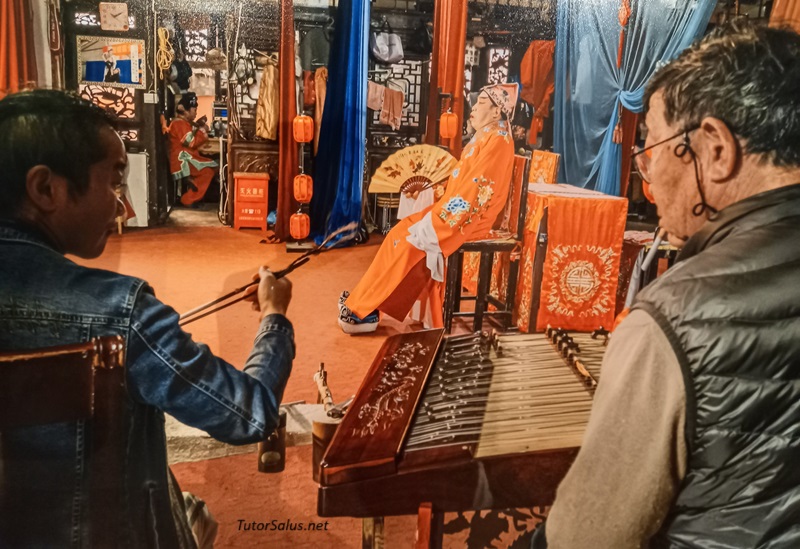
In the above photo, a detail taken from the exhibition ‘Sony World Photography Awards 2023’ held at the Museo Diocesano in Milan.
“So that I can say - as I’ve already said elsewhere - that my relation with Pirandello’s[1] work has some resemblance to the relationship with one’s father : which at first is paid for, feeling it as unjust and obsessive authority and repression, then raising us to rebellion and rejection; and finally quiet and free considering and accepting it in recognizing more similarities than, typically adolescent, differences.”[2]
It is surprising the attributing to the adult – even without naming – of a capacity of presence that demands work but that ‘the adolescent’ neglects, independently from chronological age : it is here, as a matter of fact, that the ‘typically adolescent’ prevents the uniqueness of ‘I’.
An adult – this is the surprising experience of Sciascia – is not standardizable, and independently from chronological age.
Marina Bilotta Membretti / Cernusco sul Naviglio – November 15, 2024
TutorSalus.net - Freudian journalism
[1] Luigi Pirandello (1867 Girgenti/Sicily – 1936 Rome) was one of the most known Italian writers and dramatists, and 1934 Nobel Prize for Literature. Leonardo Sciascia (1921 Racalmuto/Sicily – 1989 Palermo) was also a very famous essayist, dramatist, politician and member of the European Parliament.
[2] Cited from ‘Pirandello e la Sicilia’, by Leonardo Sciascia – Adelphi editore (1996), p. 241