

Excellent notes of economic thinking taken from analytical work.
Strawberries
It’s simple/2.
The thinker of solutions.
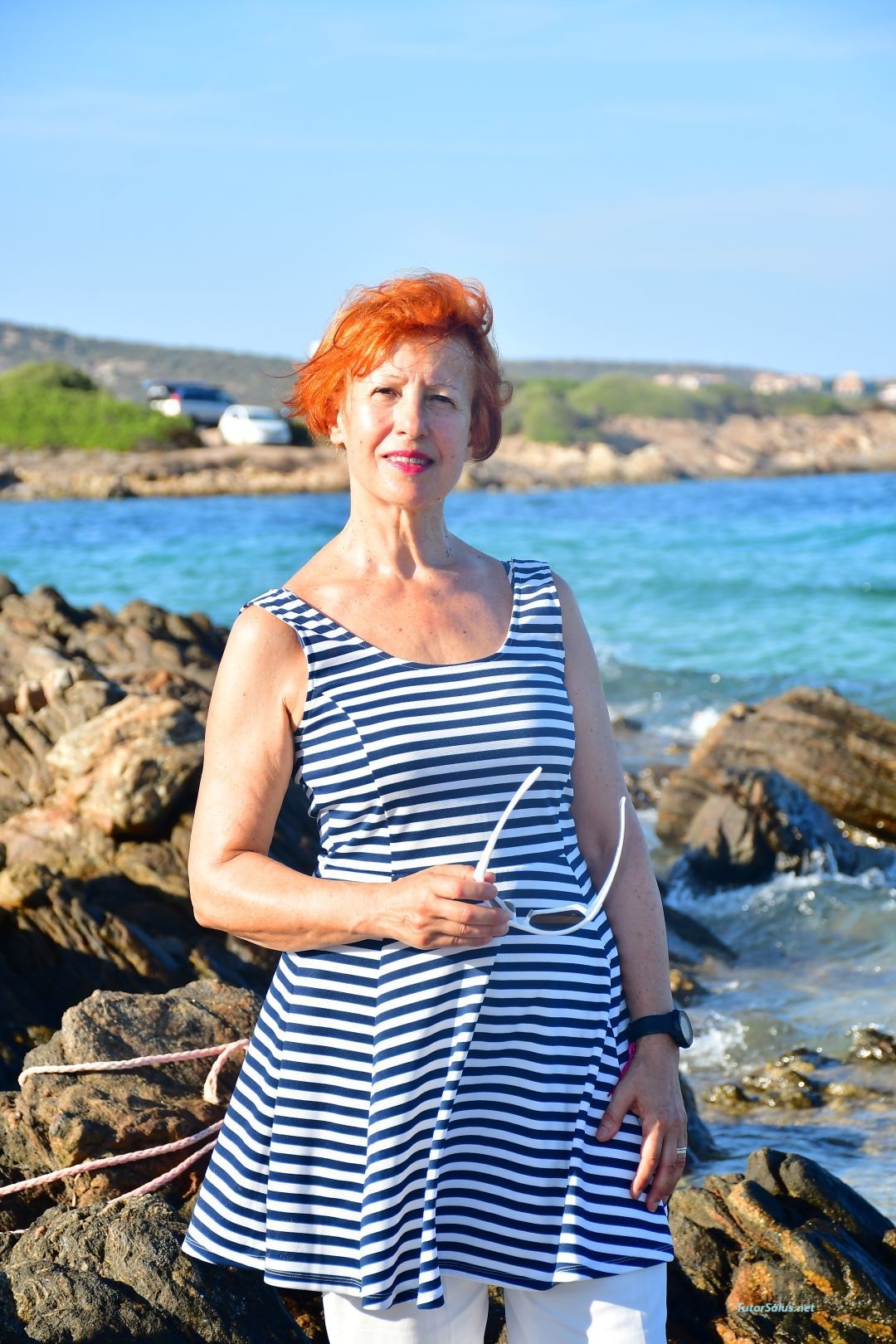
“Leaving the infantilism in culture (infantilism is psychopathological that is, of the common adult and not of the child) lies in the discovery of one’s own legislative activity that is, in what I called and will still call one’s own saint seat of Law, the opposition to which remains (un-)civilized maximum :
I remember the most Freudian thinking, the one recognising in ‘I’ the thinker of solutions, even if were of pathological compromise and the worst too. Note : the word ‘unconscious’ designates thinking indeed, one’s thinking which results from compromise when the source of thinking in ‘I’ is disowned that is, when one’s auctoritas is disclaimed even in the worst, with the attribution (rewarding first and foremost ) which is related to. We remain far from recognizing in the dream one’s ‘cogito’ which Descartes didn’t even dream of it.”[1]
“Leaving the infantilism lies in the discovery” that you can do something with reality: this is how two recognize each other as partners, it’s not about fantasies. ‘What law does one have ?’ But conscience has a short memory.
An appointment is one’s own thinking prerogative and sphere : this is law.
Marina Bilotta Membretti / Cernusco sul Naviglio – November 6, 2024
TutorSalus.net - Freudian journalism
[1] Cited from the Opening Lecture by Giacomo B. Contri at the Symposium 2011 – 2012 ‘Il Regime dell’appuntamento. Quid ius ?’, organized by ‘Società Amici del pensiero’ – Milan.
Blanche.
Without unconscious.
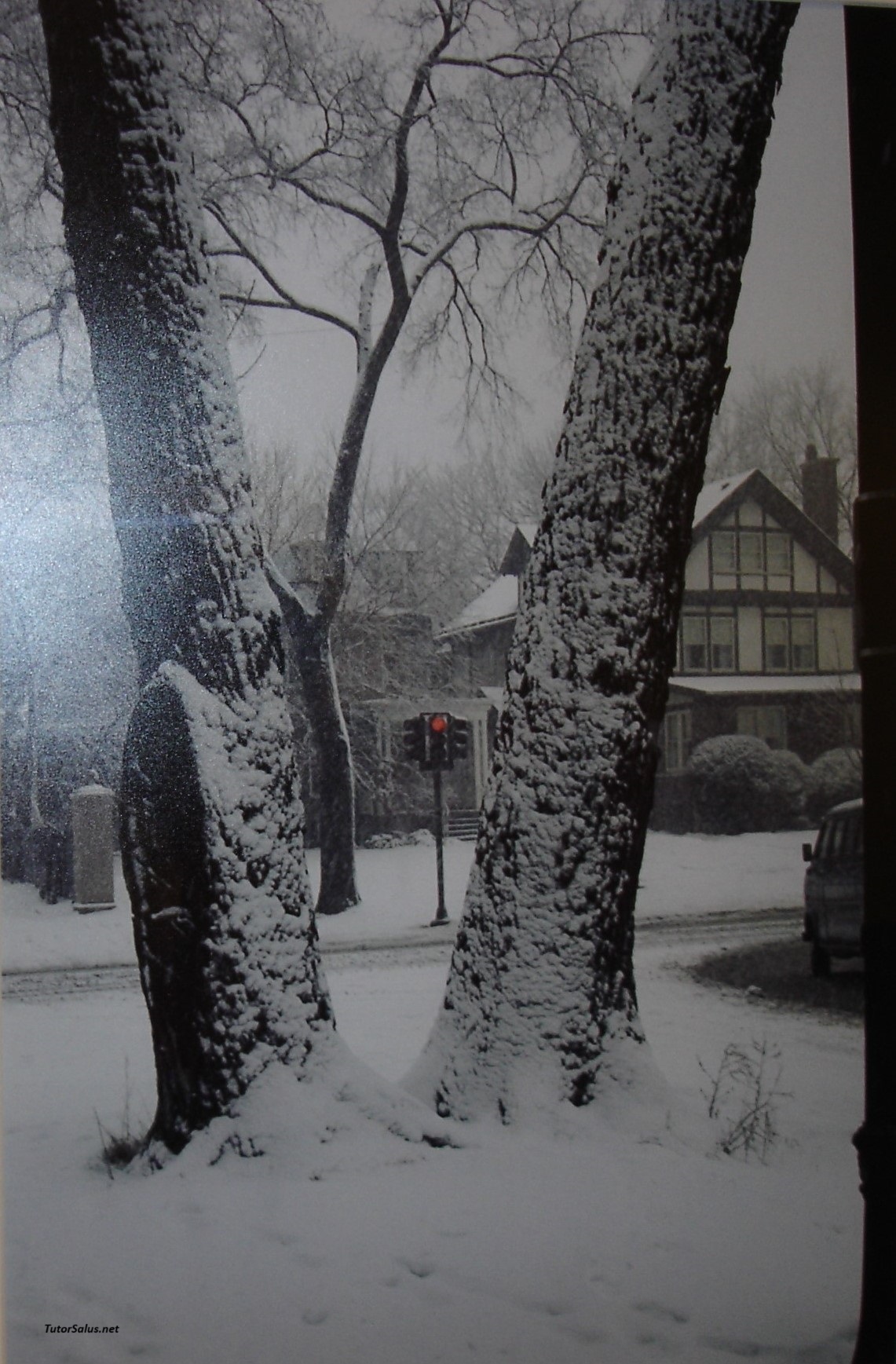
The above photo is drawn from the exhibition ‘Vivian Maier – Street photographer’ July 10 – October 18, 2015 at the ‘Museo D’Arte MAN’ in Nuoro (Italy).
Can one’s own thinking get a move on without unconscious ?
Given that the unconscious was originally identified and named by Freud as the mnemic residue[1] rejected by one’s conscience into our non-verbal memory, but clearly present as not replicating, indeed incessantly sanctioning conscience. Why then ?
Perhaps for the reason that, of the sanctioning demand which our unconscious is towards reality, one of the terms of this relationship remains the Subject as thinking of, without any stop, one’s own liking - or disliking - towards reality.
We therefore – from our own birth – of the unconscious continually learn the sanctioning capacity that forms with reality we can perceive, not before.
The traditional categories, that they would like to be innate but are already social and so historical, can train the conscience but be cleverly dribbled by our unconscious, which hardly submits to neuroses also if can be silenced : at least for a while.
Marina Bilotta Membretti / Cernusco sul Naviglio – October 19, 2024
TutorSalus.net - Freudian journalism
[1] https://tutorsalus.net/index.php/en/economia-1-talento-di-pensiero-2/564-ca-parle-4
It’s simple/1.
Attribution: not narration.
“The adjective ‘simple’ applies to a relation – relation and relationship are synonymous –, that is a relation between terms… They are not the only terms that exist in the world, they are the ones I choose, let’s say, in today’s introduction : the relation ‘simple’ which I designate is the imputation relation… Recognizing that an act has occurred is simple.”[1]
The unconscious, i.e. our thinking, is not a narration but an attribution[2] : first of all the unconscious attributes liking, from which every other attribution follows. Our language is therefore ‘synthesis’ of a power which is not at all innate : in view of that ‘synthesis’[3], no one can impose speech on a child.
Marina Bilotta Membretti / Cernusco sul Naviglio - October 1, 2024
TutorSalus.net - Freudian journalism
[1] Taken from the Inaugural lecture by Giacomo B. Contri, November 5 - 2016, Symposium 2016 – 2017 ‘La civiltà dell’appuntamento. Per amor di legge.’ Organized by ‘Società Amici del Pensiero – Sigmund Freud’, Milan.
[2] See also https://tutorsalus.net/index.php/it/pensare-da-partner/599-si-o-no
[3] ‘Ereditare da un bambino. Perché no ?’, Marina Bilotta Membretti (2014) Grup. Editoriale L’Espresso ISBN 978-88-91081-63-6, pg. 28
Those two talk each other.
Conversation con… Giorgio Venezia[1] and Aurora Amico[2].
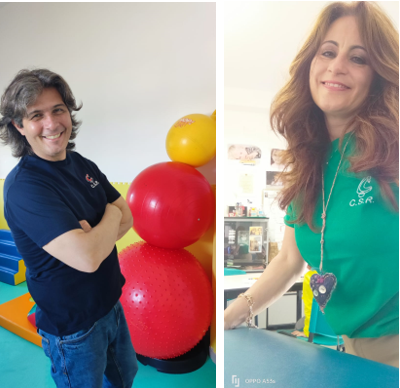
The day was very windy, an almost cold-day on this very un-Sicilian 25th of April, the sea ready to rise does not invite boats or swimmers : we met with Aurora years ago on Facebook, and we’ve been reading to each other ever since, but my trip along Sicily was a unique opportunity to really meet and we arranged this rendez-vous a few kilometers from Marsala where Aurora settled with her family. The day before yesterday was St. George, a saint so loved in the Ragusa area that the children themselves carry him in procession – well in advance of the adults who will parade on Sunday – and they are very busy, especially the porters are proud : infact, saint George is not just anyone, he is a knight victorious over the dragon that has always tried to subjugate us, and which often populates even the most difficult dreams.
Towards the evening, the wind dropped wonderfully, the colours therefore clear, without harshness. Giorgio and Aurora talked each other for the first time many years ago, a few kilometers from here, designing a future they didn’t foresee because they were both already studying something else : Giorgio was university student at the Faculty of ‘Geology’, Aurora at the Faculty of ‘Literature’. They decide to change.
At first Giorgio, then Aurora move to Paris where, at the ‘Institut Supérieur de Rééducation Psychomotrice’ (I.S.R.P.)[3] they can delve deeper into what interests them, that is “how the psychophysical, emotional, affective, intellettual, motor difficulties – as experienced and expressed by the body - are detected, prevented and treated.” An unknown universe opens up to them, which however requires enormous commitment and dedication, and they both demonstrate that they are gifted with these. The rest is predictable : they obtain the title of psychomotricist, they get married and set home at Marsala where they begin to work at the ‘Consorzio Siciliano di Riabilitazione’[4]. In costant training, with their firstborn of just six months in tow, they graduated in ‘Terapia della Neuro e Psicomotricità dell’Età Evolutiva‘ (TNPEE) at the ‘Università degli Studi – Magna Graecia’ of Catanzaro, between the seats of Matera and Montalbano Ionico.
“Since then we have never stopped studying, in order to then apply it in treatments” – says Giorgio who, even after Maikol arrived in the family six years ago, continued together with Aurora to evaluate and get the most updated information that is continuously offered in the field of neuropsychomotricity. “I am now close to obtaining – he says simply - a specific certification (Master) in ‘Augmentative and Alternative Communication and assistive technologies’ (AAC) where the support and help of Artificial Intelligence and the digital medium are becoming valuable for the treatment of serious neuropathologies, in which verbal and oral communication are absent or very reduced…
However, playing remains what you start with, with a child : there is no child who does not make use of his skills in playing…”
“How will I be able to get in touch with you ? Here is the question with which we prepare to meet for the first time a child with a serious pathology” – Aurora intervenes. “And it is also the question that we continually keep in mind when working with children, because every time it’s about re-building together with a child his, or her, thinking of a reliability that has instead disappeared, and to resume a thread that had been interrupted, for a fruitful partnership with the other…”
“To touch a stop to one’s thinking, graze that traumatic interruption that a child remembers and hates at the same time, is one of the most difficult, unfortunately frequent and even painful moments in our work…” - adds Gorgio who has been practicing for years the neuropsychomotricity in the pool, therefore with the patient entering the water. “If I don’t know how to swim, all I have to do is hold on to you who are close to me: if this gestures proves beneficial for the child, the other to whom he, or she, has clung becomes interlocutor with a reliability that cannot waver even out of the water” - Giorgio reminds. “Water is a real intermediary of the relationship…”
“And music, dance above all are a very powerful hook for relating”- Aurora reflects.
“But the voice first and foremost, the tone of voice hooks the other, or not” – Giorgio underlines. “A child with a disability understands with incredible sensitivity your tone of voice, the change of tone and responds in his own way : there is really a rendez-vous here, because if I offer you sincere attention you also accept my observation, the reproach, my severe tone; while, if you talk to me ‘standard’, with clichés, even if you have a pleasant tone of voice, then you have deceived me and I will no longer have reason to trust you…”
What is gratitude ?
“When parents are incredulous, at discharge, faced with a change that no longer seemed possible : with children, however, gratitude remains a secret of the relationship, sometimes still very difficult to communicate.”
At care of Marina Bilotta Membretti / Cernusco sul Naviglio – June 6th, 2024
TutorSalus.net - Freudian journalism
[1] Giorgio Venezia is doctor in ‘Terapia della Neuro e Psicomotricità dell’Età Evolutiva’ (TNPEE).
[2] Aurora Amico is doctor in ‘Terapia della Neuro e Psicomotricità dell’Età Evolutiva’ (TNPEE).
[3] ‘Institut Supérieur de Rééducation Psychomotrice’ (ISRP) was established in 1967 by Giselle Soubiran, a physical therapist who developed the Psychomotor Therapy (PMT) as a rehabilitation body-centered technique that investigates and treats inadequate or inappropriate motor behaviour in various situations, usually linked to psycho-emotional problems or neuromotor dysfunctions. Giselle Soubiran developed the concept of psychomotor therapy (PMT) as a proper rehabilitation therapy in the 1950s while working as a physical therapist at the ‘Henri Roussel Sainte-Anne Hospital’ in Paris, in the ‘Child Psychiatry’ ward of professor Julian de Ajuriaguerra. Today, ISRP has three campuses in France, located in Paris, Marseille, and Vichy : over the years ISRP successfully trained over 7,000 psychomotor therapists in France.
[4] ‘Consorzio Siciliano di Riabilitazione’ started in 1967 as Catania Dept. for A.I.A.S. (Associazione Italiana Assistenza Spastici) : today it is the main reference point in Sicily Region for rehabilitation with 19 accredited centers from the ‘Assessorato Regionale alla Sanità’.